
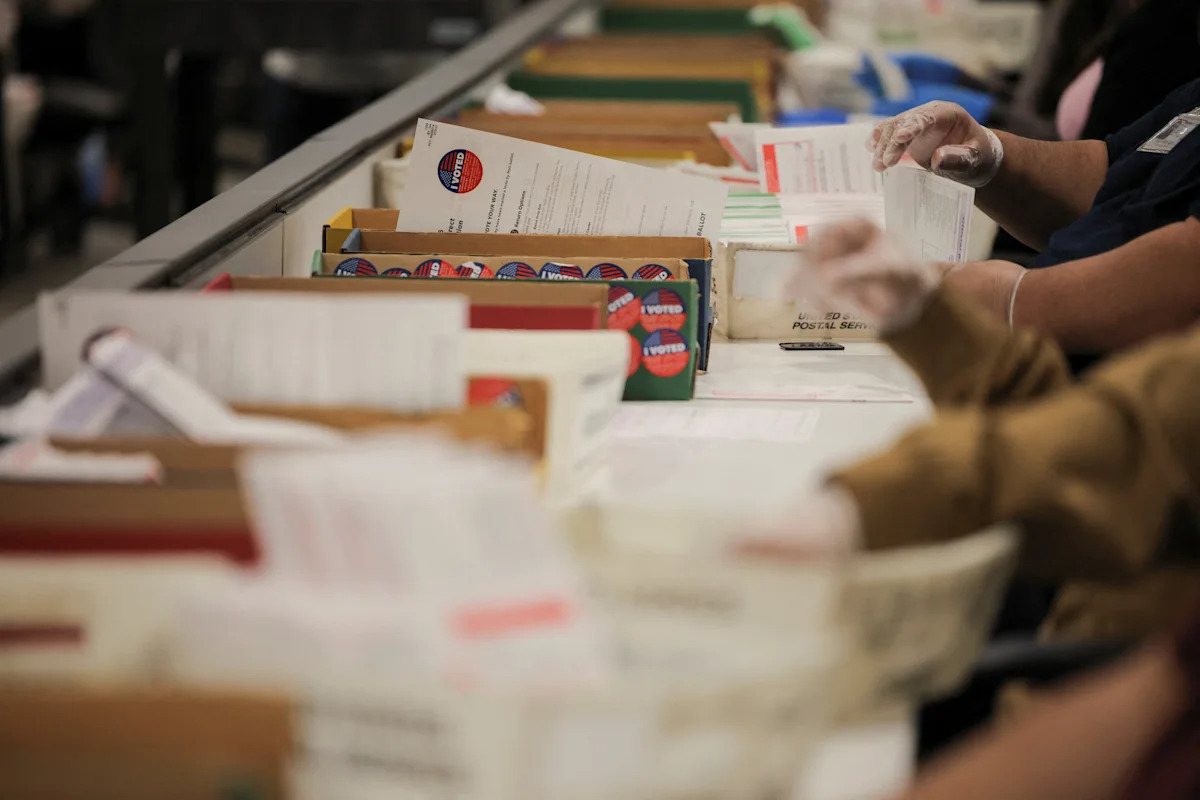
Los Angeles County election officials say a Justice Department demand to isolate ballots cast by suspected noncitizens could disrupt vote counting and make it “virtually impossible” to certify California’s midterm election results in time, saying in court filings that hundreds of thousands of ballots have already been processed.
The dispute centers on a Department of Justice list of more than 20,000 people federal officials believe may be noncitizens who received ballots for the 2026 midterm election. After receiving the list in earlier in October, Los Angeles County was asked to determine whether it mistakenly included eligible voters. The DOJ has since gone to court seeking an order requiring California election officials to set aside affected ballots until citizenship can be verified.
But county officials say they lack both the authority and the practical ability to verify voter citizenship during an election already in progress.
The last day to cast a ballot in California’s midterms is Nov. 3. Los Angeles County election administrators argue that complying with the federal government’s demands at this stage would create significant operational, legal, and technical problems and threaten the state’s timeline for certifying results.
What awaits election officials if they have to set aside alleged noncitizen votes
It would be “virtually impossible” to “timely certify the election results in compliance with state law” if the county is required to comply with the DOJ’s request, according to Monica Flores, an official with the Los Angeles County Registrar-Recorder/County Clerk, in a court filing.
County elections officials have until early December to certify election results.
By the time the county received the list of suspected noncitizens, election officials had already processed about 331,000 ballots, according to Flores. No ballots remained waiting to be mailed when county officials received the list, according to a separate court filing from Registrar-Recorder/County Clerk Dean Logan.
County officials argue that once ballots enter the normal counting process, they can no longer identify many of them.
After election workers verify the signature on a vote-by-mail ballot envelope, they separate the ballot from the envelope and process it. At that point, officials say, there is no way to determine how a particular person voted or retrieve an individual ballot for segregation.
“Nobody, including the Registrar, knows how a particular individual voted,” Flores said in court filings.
Officials also contend that redirecting staff to identify and isolate unprocessed ballots linked to people on the DOJ’s list would slow other election operations and could delay certification.
At the same time, county officials argue they lack the equipment or legal authority to independently verify voter citizenship during an active election.
That’s in addition to several technical concerns.
According to court filings from county election official Aman Bhullar, isolating vote-by-mail ballots associated with individuals on the federal list would require modifications to the election system. Election officials do not make programmatic changes during an active election cycle, Bhullar said.
“The potential consequences of implementing DOJ’s demand are severe and range from halting all counting; halting in-person voters’ ability to cast votes; or otherwise interfering with the ability to accurately count votes,” according to the filing.
Preliminary analysis gives a peek into DOJ list of ‘likely noncitizens’
Federal officials have argued the list could include people ineligible to vote because they are not U.S. citizens.
Court filings show that more than 7,000 of the more than 20,000 names on the federal list have addresses in Los Angeles County.
A preliminary review of a sample of 200 records from the list found:
-
Nearly 43% had canceled voter registration records.
-
About 42.4% had active registration records.
-
Just under 5% had inactive voter registration records.
-
Roughly 71.2% had never voted in previous elections.
The findings offer an early look at the population included on the federal list, though county officials emphasized the review was preliminary.
Federal agencies are continuing to examine what they describe as additional potential noncitizen voting records.
According to a declaration from Nicolas Bartell, associate director of the Fraud Detection and National Security Directorate at U.S. Citizenship and Immigration Services, USCIS has identified another group of more than 17,000 voting records that could be linked to noncitizens.
Court rules against DHS in separate elections lawsuit
The fight over alleged noncitizen voting is unfolding alongside a separate legal battle over federal election enforcement efforts in California.
On Oct. 21, a U.S. district judge barred the Department of Homeland Security from conducting election-related field operations and field interviews likely to involve U.S. citizens in California.
The ruling stems from a lawsuit brought by the California Nurses Association, National Nurses United, local governments and other organizations challenging a reported federal effort they describe as the “Unlawful Voter Initiative.”
The plaintiffs argued federal actions could improperly target citizens and discourage participation in the electoral process.
U.S. District Judge Araceli Martínez-Olguín found that the nursing organizations presented “substantial evidence” that DHS conduct interfered with efforts to encourage voter participation in the 2026 midterms.
The judge also barred DHS from conducting election-related field operations against citizens, or people federal officials suspect or should know are citizens, based solely on certain records generated through what plaintiffs call the Voter Eligibility Matching Policy.
According to Martínez-Olguín’s ruling, the policy is intended to identify individuals suspected of voter fraud through internal investigations. Plaintiffs argue the process relies on flawed data and risks sweeping up eligible voters.
“California Nurses Association and National Nurses United and the public’s interest in safe elections, free from interference or intimidation, far exceed Defendants’ purported interest in combating unlawful voting by non-U.S. citizens,” Martínez-Olguín wrote.
The order will remain in effect until polls close on Election Day.
Paris Barraza is a reporter covering Los Angeles and Southern California for the USA TODAY Network. Reach her at pbarraza@usatodayco.com.
This article originally appeared on USA TODAY: LA County says DOJ ballot demand could delay election results



Leave a Reply