
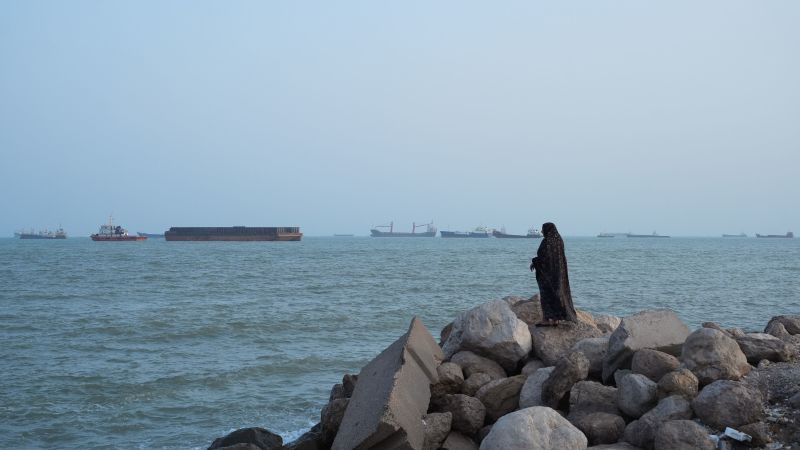

The Iran-backed Houthi militia group launched six ballistic missiles at the Yemeni city of Mocha last night, killing one person, according to Yemen’s Armed Forces.
This was the latest attack on Mocha since the conflict in Yemen escalated last week, with the Houthis claiming to be targeting Saudi forces inside the country.
Here’s what to know about the group:
The Houthi movement, also known as Ansar Allah (Supporters of God), is one side of the Yemeni civil war. It emerged in the 1990s, when its leader, Hussein al-Houthi, launched “Believing Youth,” a religious revival movement for a centuries-old subsect of Shia Islam called Zaidism.
The Zaidis ruled Yemen for centuries but were marginalized under the Sunni regime that came to power after the 1962 civil war. Al-Houthi’s movement was founded to represent Zaidis and resist radical Sunnism, particularly Wahhabi ideas from Saudi Arabia. His closest followers became known as Houthis.
Yemen’s civil war began in 2014, when Houthi forces stormed the capital Sanaa and toppled the internationally recognized and Saudi-backed government. The conflict spiraled into a wider war in 2015 when a Saudi-led coalition intervened in an attempt to beat back the Houthis.
Nowadays, Sanaa is still under Houthi control, alongside much of the west of the country.
The Houthis are backed by Iran, which began increasing its aid to the group in 2014 as the civil war escalated and as its rivalry with Saudi Arabia intensified. Iran has provided the group with weapons and technology for, among other things, sea mines, ballistic and cruise missiles, and unmanned aerial vehicles, according to a 2021 report from the Center for Strategic and International Studies.
The Houthis form part of Iran’s so-called “Axis of Resistance” – an anti-Israel and anti-Western alliance of regional militias backed by the Islamic Republic.
American officials have been tracking iterative improvements in the range, accuracy and lethality of the Houthis’ domestically produced missiles. Initially, home-grown Houthi weapons were largely assembled with Iranian components smuggled into Yemen in pieces, an official familiar with US intelligence told CNN previously.
They have previously used drones and anti-ship missiles to target commercial ships – some of which aren’t believed to be linked to Israel – prompting the USS Carney, a warship in the Red Sea, to respond to distress calls.









Leave a Reply