
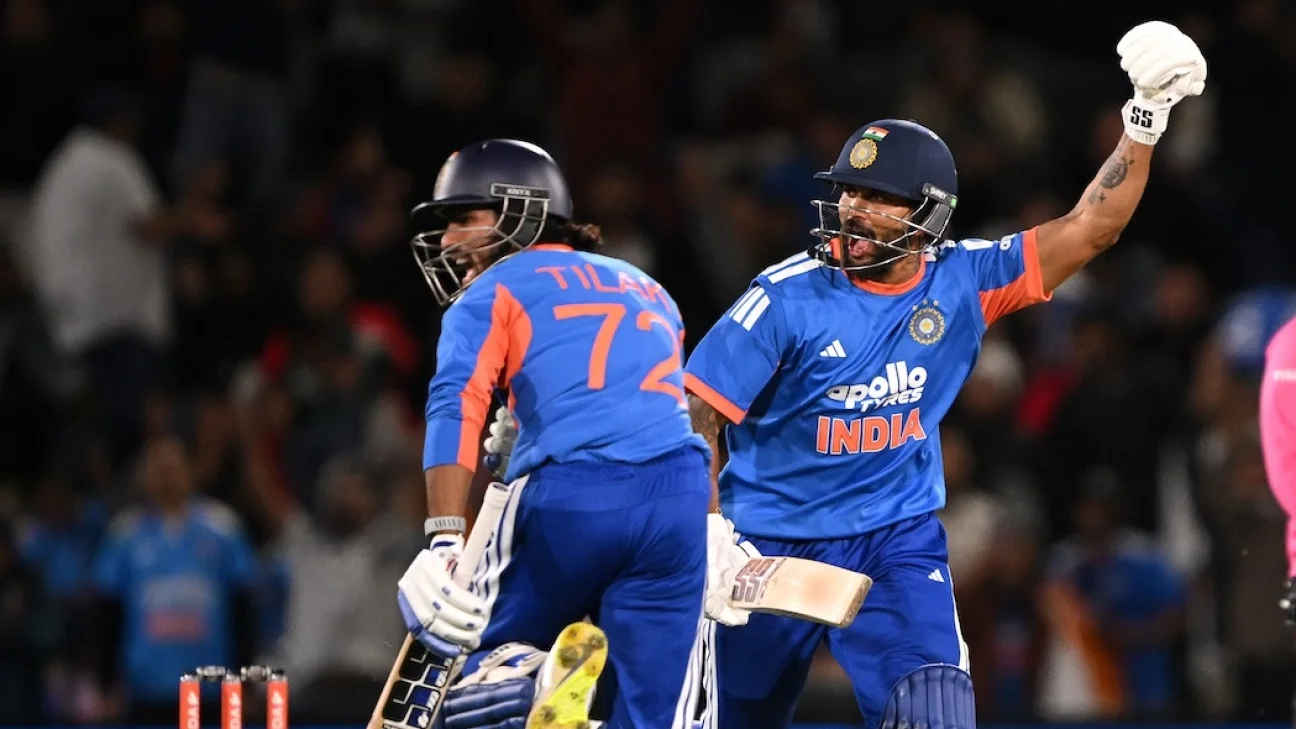
The target of 181 was a distance away. The dew that had made the chase so easy in the first T20I had gone missing. And a pitch shouldering the burdens of two matches in 48 hours was refusing to let the ball come onto the bat.
Hardik’s value comes from being good enough to bat in the top five and good enough to bowl four overs consistently. Replacing a guy like that is next to impossible. India even found that out in the 2023 ODI World Cup where their well-oiled machine broke down once their allrounder got injured. Perhaps the ability to be that good comes with a price. A body that can’t withstand the toll.
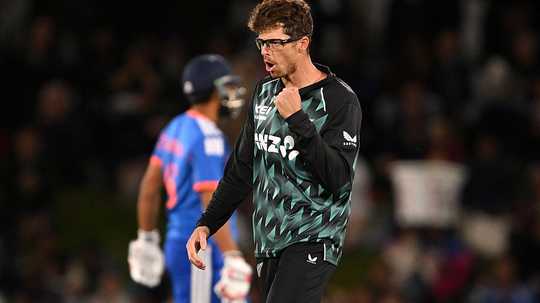
Mitchell Santner had brought New Zealand, who had dropped each of the first four India batters, back into the contest with three wickets in his first three overs. Four for 21 are his third-best figures in T20 internationals to follow a maiden five-for in the format earlier this year at the ETPL. Dhir didn’t see him as a threat. He saw the ball pitched in his arc. He hit it out of the park. He let nothing else distract him.
It is credit to the way the team is run that a 26-year-old playing only his second series is able to back himself like this; able to put aside the fear of dismissal or the drop. Shreyas Iyer, his captain, hinted at how highly he is rated within the team. “A comprehensive player.” The shot – a step-hit for six down the ground off a spinner – is Hardik’s signature. Dhir being tall and lean and bearded added to the vibes.
This game was bathed once again in the sweet afterglow of sunset, with a packed crowd in party mood serviced excellently by the Hagley Oval DJ. They cued My Time is Now as Glenn Phillips stepped up to the field and rescued New Zealand with a second successive score of 70 or more. Everyone was locked in. A man with a mullet dived head first looking for a crowd catch. A little girl leapt up the instant the needle dropped on Kaala Chashma. Her moves definitely belonged up on stage at Indian Idol or something. It was adorable. Wellington, Hamilton and Auckland have a lot to live up to in the coming week.
For all this colour, the biggest force in play was still both sides’ bowling units. India’s quicks were unhittable in the powerplay. New Zealand, having been put in, made 44 for 3 in the first six overs. Over the last three years, that is their joint-ninth lowest score at home with the field restrictions active. They managed two sixes and three fours, adding only one more to the boundary count by the halfway point.
New Zealand’s spinners worked the margins beautifully. Michael Bracewell going around the wicket with his offbreaks to even the right-handers because he wanted to cramp them. Santner doing his usual thing of varying his pace so dramatically that it feels like facing two different bowlers. Axar Patel recovering from giving up seven boundaries in the first T20I to just two here. He pinned New Zealand to the crease. Santner invited India out, his wickets the result of people having to reach in front of their body and finding the ball still not there.
This T20 was played to a slower rhythm. Niggly almost. It needed a cool head to break it. Turns out they can rest on 23-year-old shoulders too.
Even Hardik has stopped doing what Tilak has stumbled onto ever since he was moved into the middle order during the 2026 World Cup. He isn’t a finisher but India like him there because he hits pace really well. He admitted to waiting for it when he picked up the Player of the Match award and when it came his way, he had plans in place. Jacob Duffy tried bowling wide to the 77m boundary on the off side. Tilak knew that’s what he’d do. So he stepped across his stumps and brought the 69m leg side boundary into play.
New Zealand did nothing to exploit this unevenness. The first time a left-hand batter faced a ball in their innings was 18.6. Right-left combinations can sometimes be overrated. But they are disruptive at the very least. And that’s what was needed in Christchurch. Something to throw off two high-quality bowling line-ups who had settled into lovely defensive patterns. India were hard-pressed to score quick runs but they were better placed for it than the opposition.
Reddy broke into the Indian team on the back of a fine IPL in 2024. He played with Hardik on his debut and has obviously picked up a few things, like batting with both feet deep in his crease at the death. The six he hit off a Duffy slower ball – which looked like a slot ball – might only have been possible because of his positioning. That set up a 17-run 18th over – the joint-third-highest of the night – just when India needed it. Reddy explained the process behind batting in such situations; behind tackling equations that read 46 off 18.
“We have to keep calm at that time,” he said. “You have to think well. You have to have an eye on everything. If the bowler has already bowled a bouncer, he might go for a yorker – it’s just tactical things. You have to keep working on it. If you keep calm, if you just work on your batting, stay at the crease, the right moment can come at any time and then the game just changes, and you will gain the upper hand. It doesn’t happen every time but you have to keep believing.”
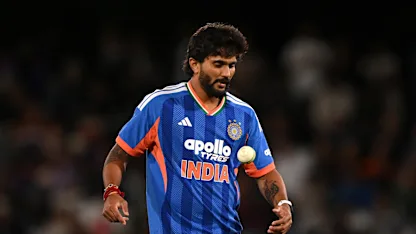
Reddy also prides himself on being an allrounder. “The amount of work I have to do is more than anyone else, on and off the field,” he said. India have invested a lot in him. This series they seem to be keen on giving him important duties. Nine of the 19 deliveries he has ever bowled in the death have come on this tour. He’s given up 15 runs. On Saturday, he and Dhir combined had figures of 4-0-38-1. Then the two of them along with Tilak smashed 108 in 56. It must be so heartening for India to see a 26-year-old and two 23-year-olds taking up key roles, withstanding high pressure and winning almost dead and buried games.
Alagappan Muthu is a senior sub-editor at Cricinfo



Leave a Reply