
Hollywood has been around for as long as anyone can remember and with that, as expected, have come technical changes and advancements. This transformation was evident during the transition from film to digital, the introduction of synchronized sound, and the shift away from manual cutting and hand-coloring techniques. Each phase of production, from cinematography and editing to how films are marketed and consumed, has undergone significant refinement.
At present, the film world is navigating a fresh cycle of development as artificial intelligence has officially entered the chat.
At its core, AI enables computers to perform tasks that typically require human intelligence. Depending on how you program it, AI can edit videos, generate storyboards, assist with visual effects, clean up audio, or help speed up parts of the production process. And truly, that is just the beginning of it.
Over the past few years, we have watched AI slowly creep into the film industry in many ways. But it has recently reached a point where the industry can no longer treat it like a behind-the-scenes experiment. It has to be addressed.
AI is quite the controversial topic at the moment. While it is dominating in some fields, it is still widely regarded as something creative industries should be careful with. Writers, actors, filmmakers, and audiences have all pushed back against the idea of AI replacing human work, especially in an industry built on performance, emotion, authorship, and creative identity.
With all the discourse, AI has been riding the see-saw back and forth. But ultimately, it seems to be staying.
Consequently, the film world is forced to adapt rapidly, and the Academy Awards AI policy serves as a definitive response to this shift.
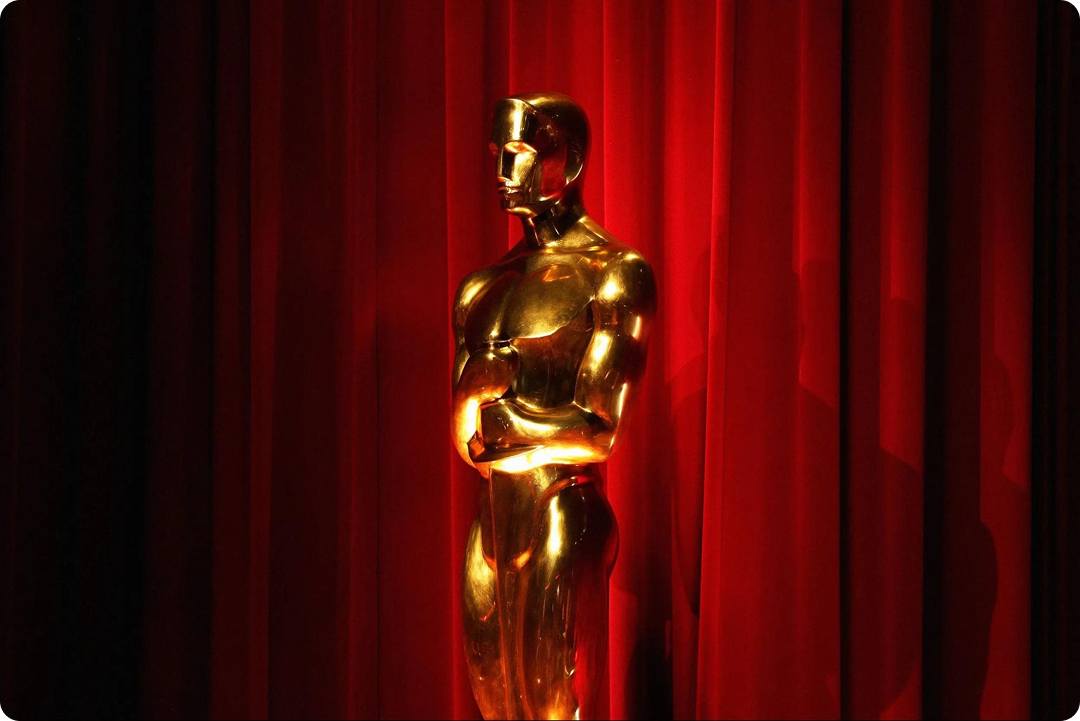
What Are the New Oscars AI Rules?
Starting with the 99th Oscars, AI-generated actors and AI-written screenplays are not eligible to win in acting or writing categories.
The Academy’s 2026 rule changes make one thing clear: AI is restricted in the categories where human authorship and human performance are the entire point. The rules are not meant to erase AI from filmmaking altogether. Instead, they are meant to protect the awards categories built around human creative work.
For acting awards, only roles credited in a film’s legal billing and performed by humans with their consent, will be eligible. That means an AI-generated actor, synthetic performer, or fully digital character created without a human performance at the center cannot compete for Best Actor, Best Actress, or supporting acting awards.
For writing awards, screenplays must be human-authored. A script generated by AI rather than written by a person cannot be submitted for Oscar writing eligibility.
That does not mean a movie is automatically disqualified because AI was used somewhere in production. That distinction matters because film has always been shaped by tools. Cameras, editing software, CGI, motion capture, and visual effects have all changed what movies can look like. The issue with generative AI is that it can appear to act as the creator itself.
Are AI Actors Eligible for Oscars?
Under the updated Academy Awards AI policy, AI-generated actors are not eligible for Oscar acting awards.
This matters because the conversation around AI-generated actors has moved from hypothetical to very real. The controversy around Tilly Norwood, an AI actress, became a flashpoint for Hollywood’s larger anxiety around AI likeness, synthetic performers, and digital talent being marketed in ways that could compete with human actors.
The issue is not just whether an AI-generated character can appear realistic on screen. It is what that character represents. If a digital performer can be created, cast, promoted, and potentially submitted for awards, then what happens to the human actors competing for those same opportunities? What happens to the value of a performance when the performer is not actually a person?
That is why the Academy’s wording around human-performed roles and consent matters. The rule is not only protecting acting eligibility. It is also reinforcing that a performance has to come from a real human being who agreed to perform it.
What Is the Tilly Norwood AI Actress Controversy?
Tilly Norwood is an AI-generated actress that became a symbol of Hollywood’s anxiety around synthetic talent.
The backlash was immediate because the character was positioned in a way that made people wonder whether AI-generated actors could begin competing with real performers for roles, publicity, audience attention, and eventually awards recognition.
That is a very different conversation from using AI as a production tool. Creating a synthetic performer to function like talent bypasses the lived experience, labor, compensation, and consent that are central to human performance.

Can AI-Written Scripts Be Nominated for an Oscar?
The Academy’s updated rules say screenplays must be human-authored to qualify.
This is where the conversation gets complicated. AI writing can be harder to define than an AI-generated actor. Did a writer use AI to brainstorm ideas? Build an outline? Polish dialogue? Rewrite scenes? Generate entire pages? Those are very different levels of involvement.
That is why AI disclosure and transparency will likely become a bigger part of awards eligibility moving forward. It will not be enough for studios to say “AI was used”, people need to know how and where.
What Is the Difference Between AI Being Banned vs. Restricted at the Oscars?
Rather than a complete ban, the Academy has opted to implement specific limitations on artificial intelligence.
This nuance is critical, as attempting to outlaw AI entirely would be impractical. AI is already being used across filmmaking in ways that are small, technical, and sometimes invisible to audiences. Instead, the Academy is focusing on the areas where the ethical concerns are clearest: acting and writing.
By restricting AI in these categories, the Academy is not pretending technology will disappear. It is saying that human-created work still needs to be protected, recognized, and rewarded.
How Does the Academy Plan to Enforce Its AI Rules?
The Academy has stated it maintains the authority to solicit additional details regarding the extent of AI involvement and the verification of human authorship as necessary. Consequently, ensuring compliance will likely hinge on the rigorous review of contracts, credits, disclosures, and documentation that substantiates that the work in question was indeed performed or created by human hands. The primary hurdle for the Academy lies in determining the precise boundary where technical assistance transitions into human replacement.
But even if enforcement gets complicated, the rule itself sends a clear message: if you want to compete for awards that honor human artistry, you need to be able to prove the human artistry is actually there.
What Do Filmmakers Have to Disclose About AI Use?
Filmmakers will need to provide more information about how AI was used, especially if the use of AI affects performance or eligibility. That does not mean every AI-assisted task needs to become a scandal. But it does mean vague disclosure will probably not be enough in the long term.
AI transparency is going to become part of how films are positioned, not just how they are produced. If a film uses AI responsibly, studios will need to explain that clearly before audiences fill in the blanks themselves.
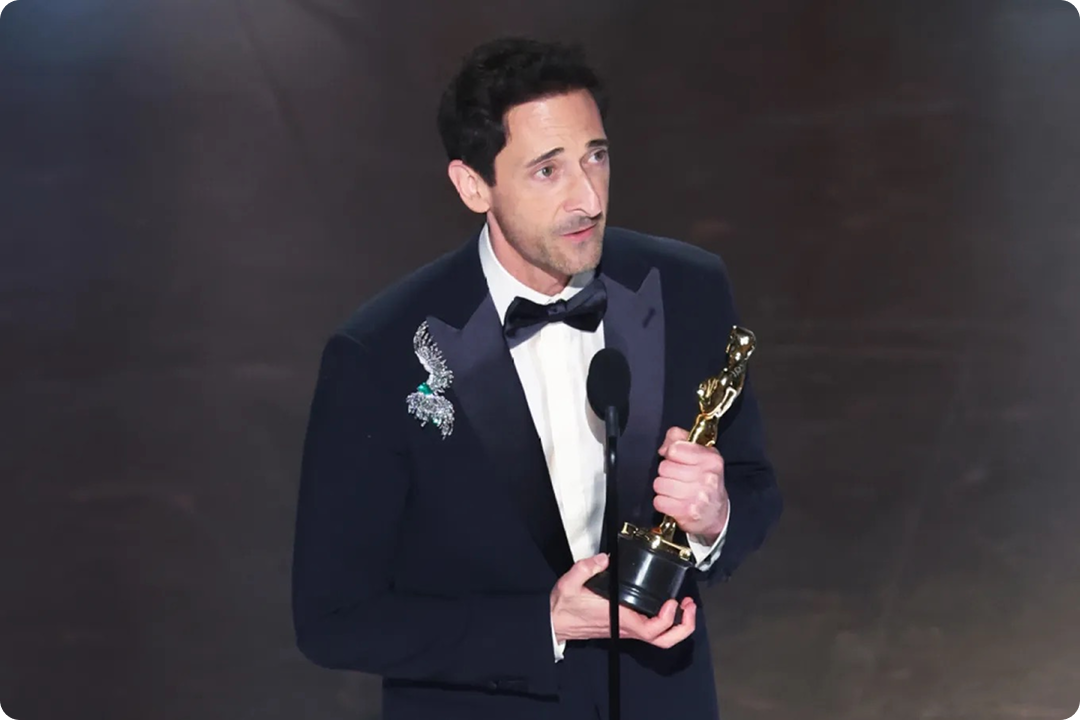
A recent example of why this matters is the controversy surrounding Adrien Brody and The Brutalist. After Brody won Best Actor, the film became part of the larger Oscars AI conversation when it was revealed that AI had been used to refine the Hungarian dialogue spoken by Brody and Felicity Jones.
The backlash was not because Brody’s entire performance was AI-generated. It was because the use of AI raised a bigger question: if artificial intelligence is used to adjust an actor’s voice, accent, or dialogue, does that change how audiences and associations should evaluate the performance? The reaction showed how quickly audience trust can shift when AI becomes part of the conversation without enough clear explanation upfront. Because once the internet decides a project is hiding something, the narrative gets very hard to control.
How Has Hollywood Reacted to the New Oscars AI Rules?
Hollywood’s reaction to these changes has been very polarizing.
For writers, these rules bring anxieties regarding creative ownership, fair pay, and the risk that studios might pivot toward machine-generated narratives to cut costs rather than investing in human-led storytelling.
For actors, AI raises concerns about likeness rights, digital replicas, voice cloning, and the possibility of being replaced by synthetic performers. These concerns were a major part of the SAG-AFTRA actors strike and remain one of the biggest issues in AI governance across Hollywood.
For filmmakers, the conversation is more complicated. Some see AI as a tool that can speed up workflows, reduce costs, and unlock creative possibilities. Others see it as a threat to the human process that makes films worth watching in the first place.
What Did Cannes Say About the Oscars AI Rules?
Cannes has taken a similar approach to the Oscars by focusing less on banning AI outright and more on protecting creative integrity, transparency, and trust.
Cannes Lions introduced new global integrity standards for AI use, including an AI Integrity Handbook designed to explain what is acceptable, what must be disclosed, and what counts as a breach in awards submissions. The goal is not necessarily to reject AI from creative work, but to make sure juries, entrants, and audiences understand how AI was used. That lines up closely with the Academy’s position.
Cannes Lions has also made AI disclosure part of the entry process. Entrants must indicate whether AI was used in the work or entry materials, and some categories ask for details about what AI tools were used, how much AI shaped the final work, and where any AI-generated inputs came from.
So the larger takeaway is that Cannes and the Oscars are moving in the same direction: AI can be part of the creative process, but it needs to be disclosed honestly. The industry is not fully rejecting AI. It is trying to separate responsible AI assistance from AI replacing or misrepresenting human creativity.

What Happened With Val Kilmer & AI in Film?
Val Kilmer has become part of the larger conversation around AI likeness, digital resurrection, and posthumous performance.
AI has already been used in projects involving actor voices, likenesses, and digital recreation. In some cases, these tools can help complete or preserve a performance. In others, they raise ethical questions about whether a new performance is being created that the actor never personally gave.
The debate around Val Kilmer AI is really about permission and legacy. Who gives consent? Who controls the actor’s likeness? Is the technology honoring a performer’s work, or is it creating something new in their name?
That is why the Academy’s new AI acting eligibility rules matter. They create a clearer standard before AI-generated performances become too common to regulate after the fact.
How Is AI Changing Filmmaking in 2026?
For years, the film industry has embraced new technology when it makes movies bigger, sharper, faster, or more immersive. But AI is different because it can act as the creator rather than just a tool. That is why this moment in time feels more substantial than past technological advancements.
The future of film marketing will not only be about trailers, posters, cast announcements, and release strategies. It will also be about creative transparency.
Ultimately, viewers are seeking transparency in what they consume. They are looking for the story behind the work, wanting to confirm if a role was genuinely acted, if the narrative was human-authored, and if technology is serving the vision rather than exploiting it.
At its core, the value of human performance, authorship, and original creation remains the industry’s most vital asset and as AI becomes more advanced, those things may become even more valuable.
In a landscape where synthetic generation is limitless, viewers will likely seek the authenticity of human-led creation above all else.
What is the Future of AI in Film?
AI is going to keep showing up in visual effects, post-production, dubbing, restoration, storyboarding, editing, and other parts of the filmmaking process. In a lot of ways, it will probably become another tool that filmmakers use to move faster, experiment more, and bring ideas to life in new ways. But the bigger question is more of a “how” than an “if.”
The updated guidelines from the Academy reinforce that while artificial intelligence can serve as a technical tool, it lacks the capacity to substitute for human performance or the deep emotional resonance that defines cinema. Ultimately, a tool may refine the process, but it must never assume the role of the creator.
The importance of holding on to this distinction is only going to increase as AI technology becomes more prevalent.
Navigating this landscape will undoubtedly become more complex as maintaining creative transparency grows increasingly difficult. It is essential that the industry solidifies its core values immediately and establishes unambiguous boundaries for these emerging tools.
It’s all about finding the right balance. Hollywood doesn’t need to fight against new tech, but it does need to push for honesty, transparency, and real protection for the human creators making the magic happen.
When it comes down to it, movies have always evolved, but the connection between the screen and the audience is still all about people. Performance, heart, and original storytelling are what keep us hooked.
AI might change the production process, but it can’t replace the value of human creativity.