
AI answer engines have changed the way users search the internet. Companies like Perplexity are testing brands and marketers to keep up with changing technology. We believe even with these changes, it’s still possible for you to be a leading source on Perplexity and out-rank your competitors!
In this blog post, we break down why Perplexity needs to be a part of your search engine optimization (SEO) and answer engine optimization (AEO) strategies outlining how to rank on Perplexity and optimize your content. We also outline 3 helpful tips on how to use Perplexity to help your brand’s SEO strategy.
Looking to Increase Your Brand’s Organic Visibility Through Answer Engines?
Why Perplexity Should Be Part of Your SEO & AEO Strategy
Perplexity AI is a research tool used by 45 million active monthly users. The platform itself still has a lot of space for growth, but it’s clear that users are interested. Perplexity uses retrieval augmented generation (RAG) to give users a clear summary of relevant topics. Its data has no cut-off date and can access the web for current information.
Previously, this capability was a differentiating factor (with most LLMs having a closed knowledge base). Now, LLMs retain their core knowledge base and still conduct RAG for up-to-date information. Perplexity’s ability to source current information is no longer differentiating.
This makes Perplexity a more direct competitor in the broad space of LLMs. That being said, given that each of these AI search engines has different knowledge cut-offs and retrieves information from differing sources, marketers are now tasked to create tailored strategies for AI search based on the specific platform.
For Perplexity, here’s what that tends to look like: Perplexity is an AI search engine that focuses on research and having the most up-to-date information (real sources and frequent citations instead of synthesizing content). Because of that factor, there’s a high trust layer for Perplexity. This makes it a key part of an SEO and AEO strategy, because users are more likely to trust the citations and brand mentions produced by this LLM.
How to Be Visible on Perplexity
Similar to ChatGPT, Perplexity relies on quality content that comes from authoritative voices. Unlike other search engines, though, Perplexity gives a lot of value to a variety of sources and collects information based on what is most recent. Here are some examples:
- News updates are more likely to be cited in Perplexity than any other LLMs; this can make it more volatile to a news cycle.
- If you ask Perplexity how it ranks user-generated content, it will tell you that user-generated content should be looked at together with authoritative websites. This answer emphasizes Perplexity’s desire to center its content around the user’s intent while still weighing experience and authority.
What Is User Intent & Why Is It Important?
Understanding the underlying reasoning for a user’s query lets your brand create material that is relevant and practical to a user. Understanding these types of users can help you create better content related to their needs. It can improve your search rankings, give users a better experience, and increase conversions. There are four types of user intent:
- Informational Intent: This query would be asked to find definitions and learn more about a topic. For example, “What is an AI-Chatbot?”
- Navigational Intent: A user wants to find a website or specific webpage. For example, “TikTok login.”
- Transactional Intent: The user wants to purchase a product or complete an action. For example, “I want to buy a computer”
- Commercial Intent: A user is conducting research about a product or service before making a purchase decision. For example, “What are the best Fintech companies 2026.”
Keep these different user types in mind when optimizing for Perplexity and when using Perplexity for SEO.
4 Ways to Optimize for Perplexity Leveraging Earned Sources & Owned Content
Before outlining the different ways to optimize for Perplexity, we’ll break the recommendations down into two sections: Earned Sources and Owned Content.
Earned Sources
Third party sites that influence your overall visibility on LLMs. This includes user-generated content, publishers, and paid lists, to name a few. By being included in these sites you will improve your overall visibility and positioning on Perplexity.
Owned Content
Content that you publish on your own site. Whether landing pages or blogs. This is the content you create and have the direct ability to change. By optimizing for owned content you are improving your visibility and citation number in Perplexity’s answers. This will increase the numbers of users coming directly to your site from Perplexity.
1. Earned Sources: Build Presence on Online Communities
Encourage Reviews
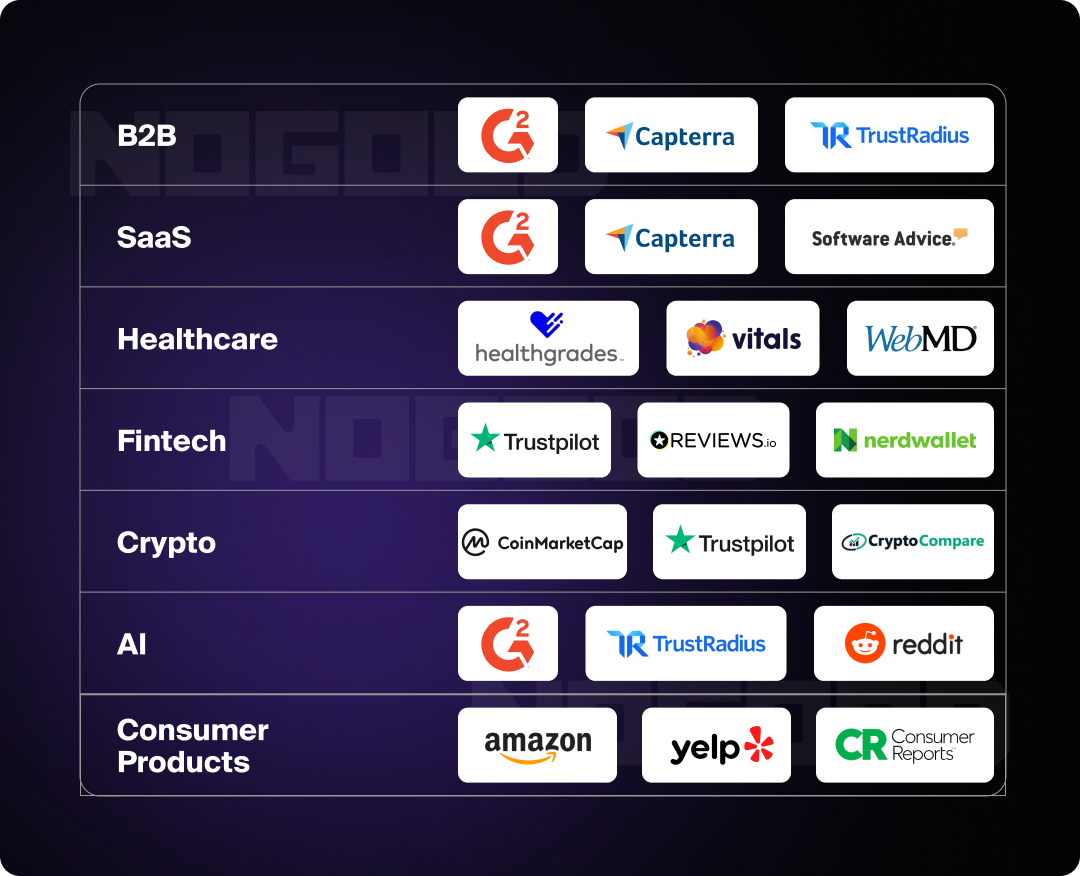
Incentivize consumers to post reviews on websites after positive experiences with your company. The goal is visibility. The more your brand is mentioned on review sites the higher chance you will have of Perplexity picking up your brand. Many review sites are industry specific. By prioritizing sites that fit your business you’ll reach your target audience.
Actively Contribute to Industry-Specific Conversations
Post on sites like Reddit, Quora, and other niche communities that align with your business (either under your business name or through a representative). This drives brand engagement and can alert you of any concerns consumers have with your product.
For instance, if you’re in Tech, contributing to subreddits like r/technology or answering questions about your product on Quora in tech-related spaces will enhance brand visibility. Not only are community-driven spaces a great way to engage directly with customers, but since Perplexity often pulls sources from user-generated content, your brand is also more likely to be picked up in its responses.
Remember to consider the platform that you are engaging on. Reddit is particularly sensitive to anything that sounds like an ad within a comment on a thread. If you do this wrong (or do it without honesty and genuineness) there’s a chance of being kicked out of the subreddit or banned altogether.
The best way to address this is to be upfront and authentic about the conversations you are having. If you’re answering a consumer’s concern about your product, first ask yourself, “Is the consumer looking for an answer directly from the brand, or insights from another consumer?”
- If it doesn’t make sense to naturally chime in, don’t.
- If the answer is yes, provide an answer with a disclaimer that you are answering from the brand.
Another type of conversation in niche forums is educational or industry-specific. This may be an opportunity to bring credibility to your account by joining the conversation. This does not mean adding your brand in unless it makes sense. Disclosure can sometimes be the most authentic interaction.
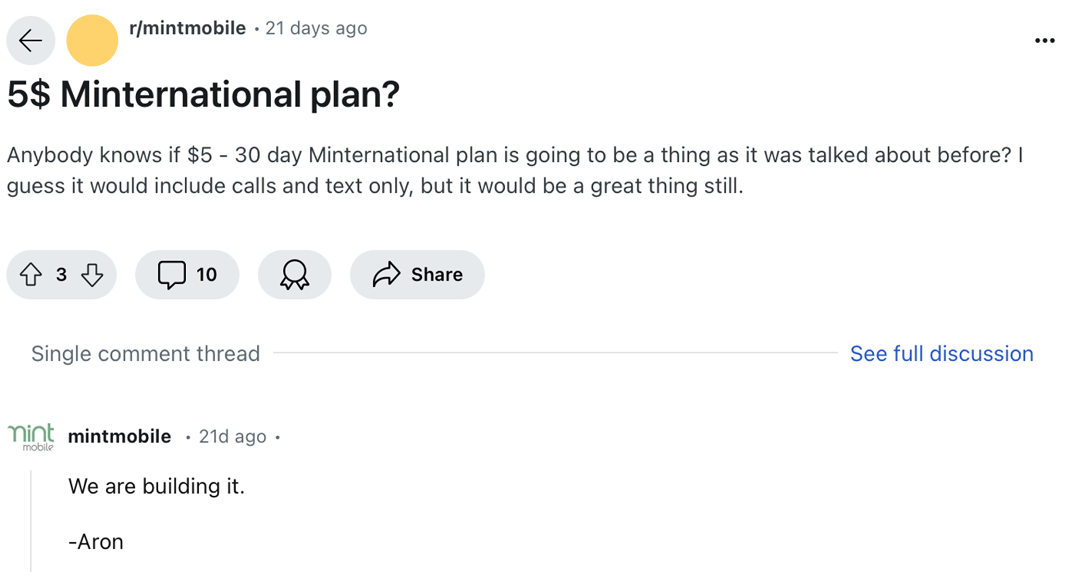
This example shows how Mint Mobile is engaging with content within their branded subreddit, but also adding personalization with an individual name. This connects both the company and a real user to the conversation.
Respond to All Reviews
Answer engines like Perplexity favor content that is human-centered and focuses on content that answers both the original query and has answers ready for potential follow-up questions. By responding to reviews, both positive and negative, you can drive engagement with your brand by showing that you care about your consumers.
Perplexity takes this information into consideration when deciding its sources for a question. More engagement with your brand from real consumers adds credibility to your company.
2. Earned Sources: Build Presence on Authoritative Websites
Specific to Your Industry
Prioritize content generation on websites that specialize in your industry. Look for sites with high traffic, good domain authority, and strong community engagement. For example, companies that work in the Fintech space should ensure they are listed on reputable sites that are common sources for Perplexity, such as NerdWallet and The Motley Fool, contributing to articles like “Best personal finance Apps” or “Top 10 Fintech Startups to Watch.” Types of content:
- Product Reviews: Request that your product be reviewed by leading websites through paid partnerships
- Top 10 Lists: Aim to be featured in lists related to your industry.
- Comparison Posts: Write content comparing your product to competitors. Posts that include competitor comparisons will be more likely to rank on Perplexity for questions asking to compare top products to each other.
- Case Studies: Share examples of how your product helped a customer or how your product fills a need in your industry.
Interviews With Experts in the Field or at Your Company
Similarly to Google, Perplexity values experience and expertise. Writing content with experts is a way to increase your chance of ranking as a source on Perplexity. Steps to consider when creating content with an expert:
- List relevant qualifications, certificates and expertise to highlight expertise.
- Ensure links to published content, guides, and whitepapers that cover the topics to establish your brand’s credibility
- Don’t just paraphrase; add in specific quotes
- Mention their title and the company they work for
3. Owned Content: Quality & Style of Content
High-Quality Content
Write fresh, authoritative content about your brand on topics you haven’t written about in the past. The content should be comprehensive, cover topics in detail including definitions and preemptively address topics of confusion in your post. Content should support your brand’s objectives and goals instead of creating a lot of content, yet missing the substance.
User-Centered
Create content that can answer multiple questions within one content piece. To optimize for Perplexity, your web page should address multiple questions that could be asked in a sequence to each other.
One way of finding what sort of questions a user would ask as a follow-up would be by asking Perplexity a question related to the topic you are writing about. After the generated content, there is a list of questions that are “related”. You can use this list to make sure your content can answer any one of these questions.
If you have one piece of content that addresses topics in multiple questions, Perplexity is more likely to recommend your product and content to the user. Web pages can be structured to answer multiple questions using clear headers and shortlists that directly and clearly answer one or more of these follow-up questions.
Clarity
Text should be written for both humans and AI, promoting natural language processing. This means your text could be easily read aloud, like when speaking or easily summarized by AI.
There are certain similarities between having high-quality content and making sure it is clear and aligned with user search behavior. Conversational queries are more common in search than fragmented sentences. Things like having lists, definitions, and headings with subheadings will improve the clarity of your content.
Perplexity can easily summarize this information and provide users with a shortened version of your content.
4. Owned Content: Detailed FAQs
Having a detailed FAQ page that is relevant, accurate, comprehensive, and directly connected to user queries will encourage Perplexity to to use your content when answering short user questions.
Answer engines in general favor content that is well-structured and directly connects to the user’s intent. This can be easily shown on a detailed FAQ page.
The Future of Perplexity AEO
Perplexity values quality content that can be formatted in a conversational tone. It may seem daunting to tackle ranking on the many answer engines that are being developed but it is worth it. If you focus your content on client intent then ranking won’t be nearly as hard as it seems.
The positive with Perplexity is that it isn’t, yet, a “winner-takes-all” situation, unlike Google’s AI Overview. With quality content, you’ll be able to rank!