
Updated Aug. 15, 2026, 1:34 p.m. ET
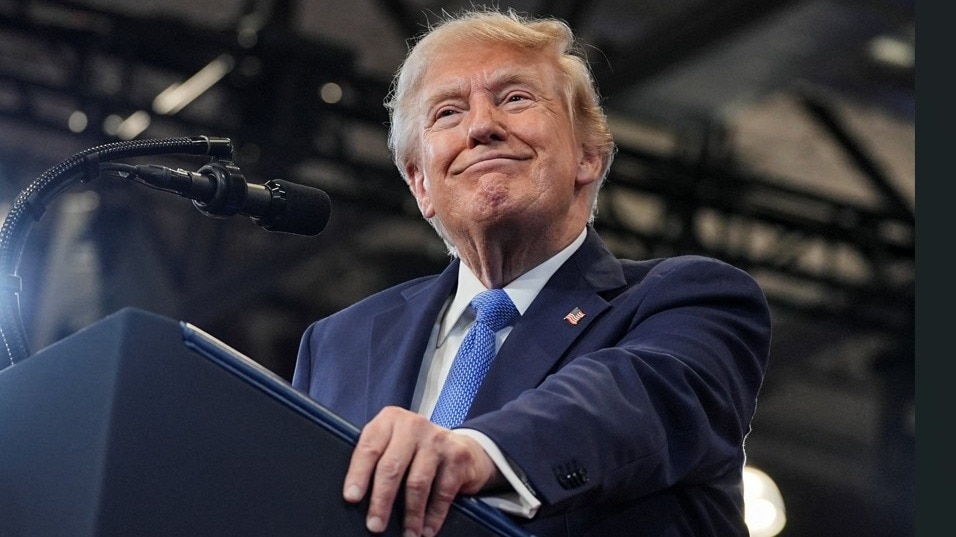
WASHINGTON – President Donald Trump is under increasing pressure from members of his party to find a way out of the Iran war, with the midterms on the horizon and Republican voters souring on a conflict that he once predicted would last just a handful of weeks.
Republicans are airing their frustrations publicly and privately about what they see as muddled messaging coming out of the administration on a conflict that’s driven up prices for voters.
A growing number of prominent MAGA figures have urged Trump to end the conflict, saying there could be dire political consequences if it continues. Republican strategists have echoed those concerns, saying Iran is a major drag on the party heading into November.

Trump has alternated between threats and diplomatic overtures to get the job done, but the war is now approaching six months with no end in sight. Election Day is less than three months away, and the administration has resorted to insisting that the fundamentals of the economy are strong.
But the rate of inflation remains higher than it was before the conflict began, or Trump took office, coming in at 3.4% percent last month. The war has pushed gas prices above $4 a gallon and driven up other costs, contributing to affordability concerns that are top of mind for many voters.
“It’s one of those issues where there’s almost no upside,” GOP pollster and Cygnal founder Brent Buchanan said of the conflict.

The protracted conflict has put GOP lawmakers on the defensive as they spend an extended congressional recess in their districts.
Retiring Sen. Thom Tillis, R-North Carolina, said anxiety over Iran may mean it’s time for some Republican lawmakers to “separate from the White House” on the war, which has hurt the president’s approval rating and threatened the GOP’s chances of maintaining control of Congress.
“If it’s unpopular, and they feel that way, they should tell their constituents the truth,” said Tillis, whose impending departure from Congress has allowed him to break publicly with the Trump administration on key issues.
‘Election is going to be a referendum’
Lawmakers said the war dominated the conversation when Vice President JD Vance met privately with Senate Republicans on Capitol Hill before their August recess.
Sen. John Kennedy, R-Louisiana, told reporters afterward that Vance and other top administration officials should hold a press conference to explain Trump’s rationale for going to war. Kennedy said he worried that the American people “are somewhat confused about why we went in and where we are.”
Trump isn’t “always disciplined in his messaging,” Kennedy said in an earlier appearance on CBS’s “Face the Nation.” He suggested other officials take the lead in explaining “what’s going on in Iran. Why we went in? Why we’re still there?”

Negative public opinion on the conflict is putting Republican members of Congress in an awkward position as they fan out over the August recess, some campaigning for reelection and others supporting colleagues who are on the ballot. Some have expressed nervousness over how they’ll handle the topic.
Internal messaging guidance circulated among the Senate Republican Conference in July acknowledged that high fuel costs linked to the war are a problem. The strategy document, obtained by USA TODAY, urged GOP senators to say they are “very concerned about the price of gas and want to make sure prices come down.”
Trump was elected in part on a promise to bring down inflation, making the surge in gas prices and its overall impact on inflation a particular concern, GOP pollster Whit Ayers said.
“What we need is strategic clarity from the White House. Absent that, I think they’re going to have to be sympathetic to the fact that to most people, this is not a popular war,” Tillis said of his advice to GOP lawmakers. “So accommodate that,” he added.
The White House said Trump can both address voters’ economic concerns and strengthen national security.
“While the President ensures that Iran will never possess a nuclear weapon for our national security, the President has been equally focused on unleashing prosperity for working-class Americans, from creating Trump Accounts to slashing job-killing regulations and taxes,” White House spokesperson Kush Desai told USA TODAY in a statement. “For the Trump administration, economic prosperity is not possible without national security, and national security is not possible without economic prosperity.”
Democrats are promising to press the issue on the campaign trail.
“This election is going to be a referendum on this war that Donald Trump is losing,” Sen. Chris Murphy, D-Connecticut, said Aug. 9 on NBC’s “Meet the Press.”
Iran war roils MAGA
Most Republican lawmakers continue to publicly back Trump’s approach to Iran, with only a smattering voting to end the war. But prominent MAGA figures have been increasingly outspoken about their desire for Trump to focus on domestic issues.
Conservative media figures such as Matt Gaetz, a former Florida lawmaker, and online influencer Benny Johnson have called on Trump to end the war in recent days.
“Foreign wars with no end in sight are always unpopular. They will always be political cancer. Especially with young people,” Johnson wrote on social media July 30. “End the war. Be done. Refocus on America. Gas, grocery, home prices and immigration. That’s how we win.”
Fox News host Laura Ingraham outlined the political peril for Republicans on her show last month.
“With the midterm elections a little more than 100 days away, the clock is ticking for President Trump to get out of this war before voters head to the polls. It’s making a lot of Republicans nervous,” Ingraham said, adding: “Republicans cannot let this become an endless distraction, especially if they want to win in November.”
Polling shows the war is deeply unpopular, with only 36% of Americans approving of Trump’s handling of the conflict in Iran, according to the Real Clear Politics polling average of numerous polls. Even among Republicans, just 61% approved in an AP-NORC survey taken July 23-27, down from 71% in a previous survey.
“We’ve gotten to the point where about the only people who still support the war in Iran are those who strongly approve of Donald Trump’s job performance overall,” Ayers said.
Yet, even the president’s die-hard supporters are becoming more anxious about the costs associated with the war.
In a July survey conducted for POLITICO by the independent polling firm Public First, 37% of self-identified MAGA voters said Trump should only stay in the war if it doesn’t increase costs, a jump from the 29% who shared the same sentiments in May. Nearly 1 in 5 said Trump should end the military campaign regardless.
Trump supporter Jamie Monaco, 36, said the United States should stay out of overseas conflicts, offering her thoughts on the Iran war as she waited to see the president at an Aug. 14 event in New York.
“We shouldn’t be in foreign wars,” said Monaco, a three-time Trump voter, adding that she and her husband are “struggling in this economy.”
‘Massive drag on Trump’s numbers’
Trump allies fret that the conflict is hurting the president’s appeal as his support dips among White working-class voters and other groups that have powered his victories.
Buchanan, the GOP pollster, said the war damaged Trump’s “credibility” with supporters who may not have backed Republicans in the past but were willing to give Trump a shot because of his “no new wars” message, particularly younger voters.

Trump broadened the GOP’s coalition of voters, but Iran could destroy what the president built, said Joe Kent, a former Trump administration counterterrorism official who resigned over the war. Kent, who said in an interview that he’s “still a Trump guy,” described Iran as a political liability.
“Politically, this is going to consume the rest of his presidency if he doesn’t end it now,” said Kent, who met with media personality Tucker Carlson, former Rep. Marjorie Taylor Greene and Rep. Thomas Massie to discuss the issue in July.
The confab of MAGA exiles who’ve been critical of Trump’s approach to the conflict sparked speculation about a new anti-war political movement. Kent told USA TODAY that he believes an “America First coalition” could be a political force, whether it’s within the GOP or a third party.
Even as Trump gets pushback from some of the MAGA faithful, he is being urged by more hawkish conservatives to maintain pressure on Iran.
Fox News host Mark Levin wrote Aug. 8 on social media that he’s “sounding the alarm” about efforts to reach a peace deal, saying his audience wants “the enemy defeated.” Rep. Don Bacon, R-Nebraska, told USA TODAY “there’s concern that Trump will stop, and Iran will still be a threat.”
Trump’s ever-changing approach to Iran
Trump has often seemed torn between the competing visions in his party, vacillating between diplomacy and trying to force Iran into submission through military strikes.
The result has been what some perceive as an erratic approach – and one that Bacon said is wearing thin.
“Folks are tired of Trump’s on and off again announcements,” Bacon, who’s leaving Congress, said in a text message, adding: “One day it’s we are close to making a deal. The next day we are going to bomb them worse than” World War II.

When Trump launched the war, he described it as a “little excursion” that would wrap up in a few weeks. Winding down the conflict has proved difficult, though.
After threatening a major escalation, the president signed a preliminary peace deal with Iran in June. It quickly fell apart amid jockeying over control of the Strait of Hormuz. The United States then launched nearly two weeks of daily military strikes in July, briefly paused the attacks, resumed strikes and then paused them again.
In recent days Trump has appeared content to hold back and maintain economic pressure with a blockade while negotiations continue over the strait. In a speech Aug. 14, the president said he might declare the Strait of Hormuz “a territory of the United States.”
The White House has been patiently awaiting the outcome of talks between Iran and Oman about opening a shipping channel through the Strait of Hormuz. The United States is not a direct party to those negotiations, which have included demands from Iran that the Trump administration end its blockade. Pakistan said Aug. 11 that the United States and Iran were also close to “some sort of an arrangement.”
In the meantime, one senior White House official noted, Tehran has not been shooting at commercial vessels in the strait, indicating it as movement in the right direction. However, the UAE has since accused Iran of attacking three ships linked to a state-owned oil company.
Senate Foreign Relations Chairman Sen. Jim Risch said everybody wants to see the war wrapped up – and there are a number of ways to arrive at a point in which there’s more certainty in the relationship with Iran.
It may not be as simple as striking a deal, the Idaho Republican indicated.
“I don’t know that when you’re dealing with Iran, the word ‘ended’ comes into the conversation. It certainly hasn’t been that way in the last half century. So I think I would lower my expectations on ending,” he said. “’Managing’ would be a better word than ‘ending,’” he added.
Contributing: Swapna Venugopal Ramaswamy







Leave a Reply