
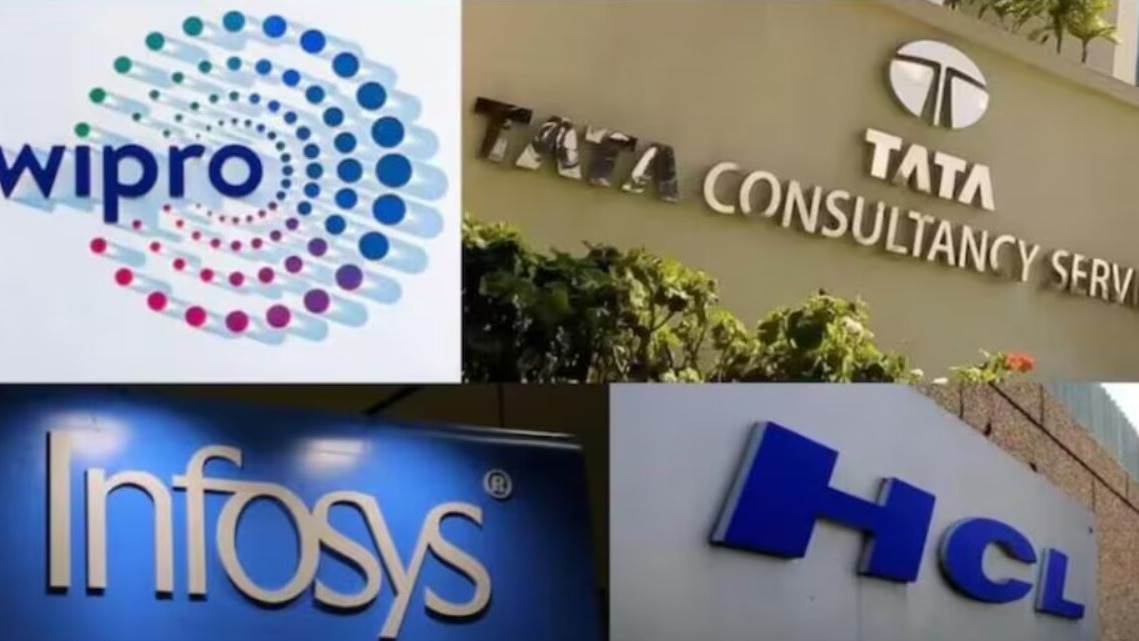
The US Department of Labour has suspended some of the world’s largest IT outsourcing firms, including Infosys, TCS, Wipro and HCL, from the Permanent Labour Certification Program (PERM), accusing companies of abusing the system for foreign workers seeking permanent residency.
PERM is a labour certification that employers typically need before sponsoring a foreign worker for an employment-based Green Card. It is required for several major employment-based Green Card categories, although not all of them.
Under the programme, employers must demonstrate to the US Department of Labour that there are no qualified, willing and available US workers for a specific job, and that hiring a foreign worker will not adversely affect the wages and working conditions of similarly employed US workers.
WHY DOES IT MATTER?
The move puts pressure on Indian IT firms such as Infosys, TCS, Wipro and HCL, which are major employers of Indian professionals in the US, and could affect employees seeking to transition from temporary work status to permanent residency.
However, the action does not cancel H-1B visas or prevent these companies from employing H-1B workers. Instead, the suspension blocks the companies from filing new PERM applications and puts pending applications on hold for as long as the suspension remains in effect. The Indian IT firms could also face higher legal, compliance and administrative costs.
“So, what do the new measures mean?” US Labour Secretary Keith Sonderling asked, before adding: “We will not accept any new or process any pending permanent labour certifications involving these companies.”
WHY MICROSOFT IS AT THE CENTRE OF THE ACTION
Thanking US President Donald Trump, Sonderling announced the action against Cognizant, Infosys, Tata, Wipro, HCL and Capgemini, while also suspending Microsoft and Adobe from the programme, citing multiple active federal investigations.
He said the move amounted to “cutting off the head of the snake” at the heart of “stealing jobs from capable Americans”.
“There has been no company in the United States, unfortunately, that has abused this system more than Microsoft,” Sonderling said at a White House press conference, with US Vice President JD Vance by his side.
Vance said Microsoft laid off 6,000 American workers in 2025 after certifying that it could not find qualified American employees, yet was approved for more than 6,000 H-1B visas and filed 3,682 PERM applications. He said nearly 1,000 of those applications were for the same positions from which American workers had been laid off.
Vance said the H-1B visa programme was intended to allow companies to bring in “the best of the best” from outside the US for positions that could not be filled by American workers, but alleged that the programme had become “rife with fraud.”
“If you do the math, for every worker that Microsoft laid off, they replaced that worker with one and a half foreign indentured servants,” Vance said.
“There has been no company in the United States, unfortunately, that has abused this system more than Microsoft,” he added.
However, the crackdown was not just limited to companies. The Labour Department’s action also extends to nine universities, including Harvard, Yale and Stanford, which Sonderling said would be investigated over allegations that they brought in international students to undercut American wages.
Labour Inspector General Anthony D’Esposito said subpoenas had already been served.
WHAT DOES IT MEAN FOR INDIAN IT WORKERS?
The immediate impact for Indian professionals is likely to be delays in the employer-sponsored Green Card process, rather than cancellation of their existing H-1B visas.
Employees of affected companies who are already in the PERM process could see their applications delayed for as long as the suspension remains in place. Those whose employers were preparing to begin the process could also have to wait before new applications can be filed.
This latest move by the Donald Trump administration could have a particular impact on Indian professionals in the US, with about 37% of Indians who obtained Green Cards in FY2023 doing so through employment-based preferences — a route in which PERM is an important step.
Any prolonged suspension could therefore add to the uncertainty for Indian technology professionals whose employers are sponsoring them for permanent residency.
– Ends







Leave a Reply