
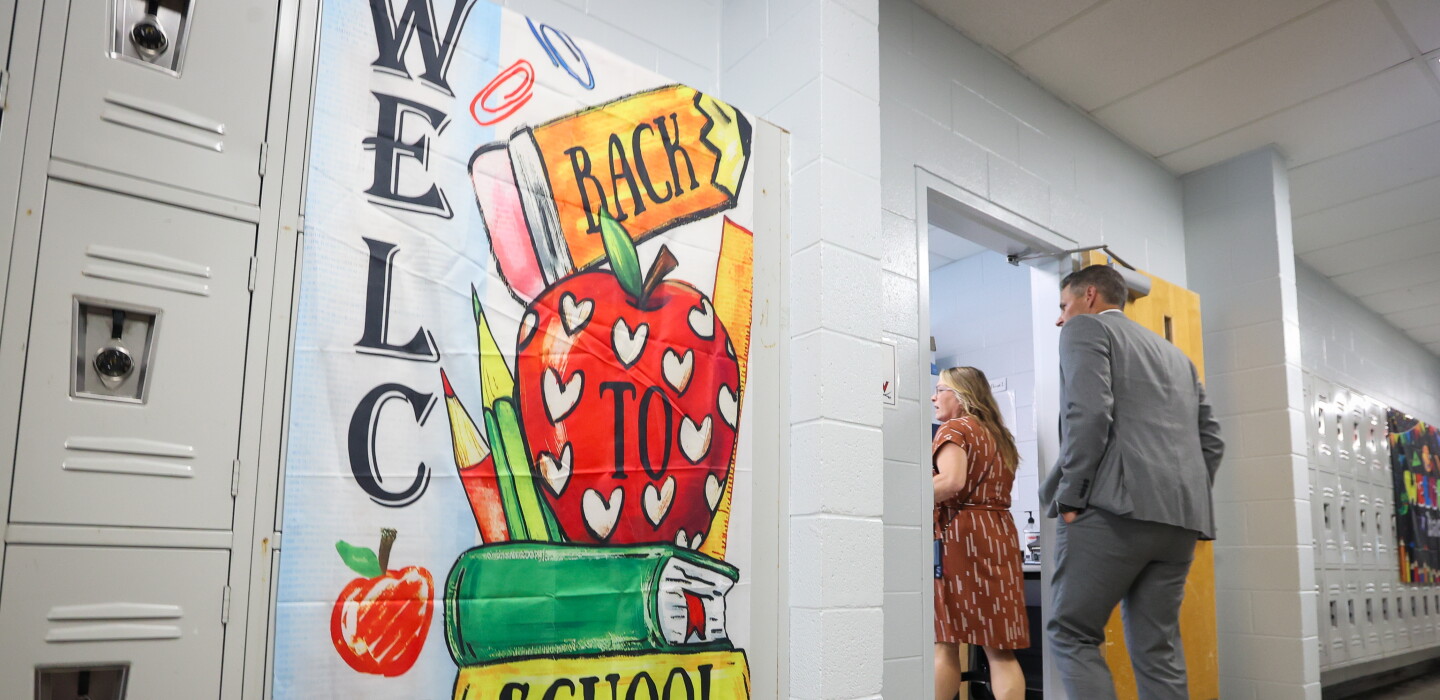
Back-to-school season is in full swing, and students and staff are about to return to classrooms where artificial intelligence is no longer a novelty, nor a standalone chatbot; it is increasingly embedded in the form of new agents, features and AI-assisted workflows in tools they already use.
Educators at a webinar Thursday hosted by the Future of Education Technology Conference (FETC) said the time is ripe for schools to leverage AI in all classrooms, specifically to enhance instruction rather than solely improve efficiency. AI, they said, has created an opportunity — and some urgency — to reconsider what is fundamental to learning: critical thinking, human interaction, curiosity and the ability to scrutinize what technology produces.
“We’ve seen a lot of trends come and go, and with the rate at which AI is impacting not just the world but already impacting classrooms, I really feel like this is a critical time for us to make sure that we take advantage of these tools and really help them positively impact the lives of our students and our teachers,” said Scott Bricker, founder and CEO of education consulting firm Awefull Learning.
HUMAN-CENTERED LEARNING
All panelists emphasized that AI tools should be used to deepen learning instead of accelerating it.
Bricker, who formerly taught high school math in California, said that schools risk focusing too heavily on the efficiency gains AI can provide for tasks like grading and lesson planning while overlooking how students learn and develop. He said students still need opportunities to strengthen skills such as critical thinking, problem-solving, executive function and metacognition — that is, thinking about one’s own thoughts.
“What I hope we do most with these AI tools is get back to the core aspects of cognitive development,” he said. “As [students] move through their K-12 education experience and even into higher ed, making sure we’re not just … looking for answers, but really getting students to be resilient thinkers.”
That may require deliberately creating more space for students to pause and reflect during instruction. Bricker called for “more boredom in the classroom,” describing time when students could “sit in their thoughts for a little while” rather than constantly moving to the next task.
He added that technology, perhaps counterintuitively, can also be designed to encourage that productive struggle, where a student works hard at a challenging problem or task before finding an answer. Bricker demonstrated Microsoft’s Study and Learn agent, which responds to a student’s math question with prompts and steps rather than immediately supplying the answer. That approach, he said, is intended to push students toward a more meaningful understanding of content.
Another panelist noted that deeper thinking should not equate to more screen time. John Meehan, a former middle school teacher and instructional coach, shared how he had students create a large-scale map of settings from The Great Gatsby, using Lego bricks to build models based on textual evidence, emphasizing the benefit of playful and tactile learning experiences that require students to make connections, explain their reasoning and interact with one another.
AI LITERACY AS A CORE COMPETENCY
Speakers also said that, as a new school year takes shape across the U.S., educators need to explicitly teach students how AI works, where it can fail and how to critically evaluate its outputs.
Lindy Hockenbary, a K-12 ed-tech consultant, described AI literacy as a subset of digital literacy centered on understanding, using and evaluating AI. She said students need to recognize risks and limitations — specifically including bias, hallucinations and deepfakes.
“AI is biased because the training data is biased because it’s made by humans and humans are biased creatures,” she explained.
Hockenbary said one way to make those concepts accessible is to let students examine how AI systems make predictions. She used Google’s Quick Draw, a digital drawing tool, during her presentation to introduce students to training data and pattern recognition. She said students using the game doodle an object, and the platform guesses what the user drew. Students can examine the drawings in the system’s dataset and identify the patterns influencing its predictions.
“Drive home with kids that AI is not human. It’s just a predicting machine … No matter how complex AI gets, it is still just predicting using really complex math,” she said. “It takes away the magical thinking about AI … this idea that it’s the answer to everything and it’s always right.”
Hockenbary also emphasized how important it is for students to understand how bias enters AI systems, noting that many platforms are designed to appeal to younger generations, particularly Generations Z and Alpha.
She explained how she showed students that the data used to train an AI system can shape its results: Using Google’s Teachable Machine, through which anyone can build custom machine-learning models without knowing how to code, students can build models to classify plants using images they collect themselves. But a model trained only on locally available plants can develop a regional bias, she said, prompting students to consider what information is missing and add examples from other regions.
“They’ll realize that their model is very biased, and then we’ll go find pictures from other regions to make their model less biased,” Hockenbary said. “This really teaches them that AI is not always correct.”
PROACTIVE CURRICULUM AND IT TEAMS
Finally, panelists encouraged curriculum and IT teams to work in lockstep this fall and moving forward, aligning classroom technology with age-appropriate access to digital tools and district policy so that AI supports learning without outpacing safeguards.
FETC Chair Jennifer Womble, the webinar’s moderator, said questions about access — whether teachers and/or students can use specific tools — should be part of conversations with district IT teams as communities return for the new school year. She added that teachers may also discover that tools they already use have gained AI capabilities.
Alongside those conversations, Tina Nuñez, ed-tech resource teacher in Albuquerque Public Schools, said educators should begin by identifying the problem they want to solve before choosing a piece of technology.
“I always give my teachers in my district this warning: Be mindful of the AI rabbit hole … Sometimes you get so into things that you forget the point of what you’re trying to do,” Nuñez said. “So instead of looking at a tool, I want to look at solving the problem.”











Leave a Reply