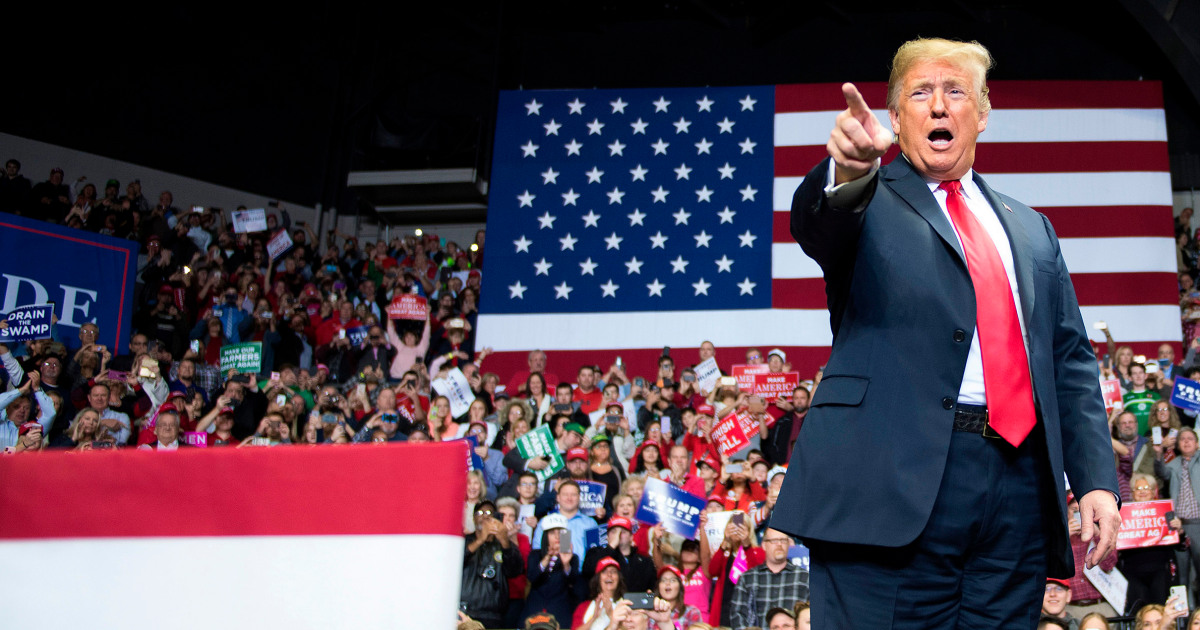
President Donald Trump’s effort to defeat Republicans who have opposed key priorities turns Tuesday to Indiana’s state Senate primaries, in which he and his allies are trying to unseat seven GOP state senators who voted last year against redrawing the state’s congressional map.
Subscribe to read this story ad-free
Get unlimited access to ad-free articles and exclusive content.

Those races are the highest-profile primaries in a slate of contests across Indiana and Ohio, where voters will decide whether those lawmakers should be punished for frustrating Trump’s effort to pad the GOP’s slim margin in the House and also set the stage for key elections this fall.
Here’s a look at what to watch for in those primaries, as well as in a special legislative election with major implications for the balance of power in Michigan, a key swing state.
Trump’s Hoosier play
It’s not typical for state legislative races to take center stage on a primary night. But it’s also not typical for the president of the United States and allies to devote time and resources toward unseating almost 20% of a state Senate caucus.
Trump has endorsed challengers to seven of the eight Republican state senators running for re-election who voted against the Trump-backed redistricting play, scrambling the races of longtime and popular incumbents. He has also endorsed a number of Republicans who favored redistricting, including two incumbents who face Republican primary challenges from their right.
Ad spending in the seven races in which Trump endorsed primary challengers has climbed to $11.8 million, according to AdImpact —a massive escalation, replete with a flood of ads and direct mailers, from what those races typically get. Less than $500,000 was spent on Indiana Senate ads across the entire 2024 election cycle.
Hoosier Leadership for America, a group aligned with Republican Sen. Jim Banks, is the top outside spender in those races, with nearly $5 million in ad spending so far.
America Leadership PAC, run by a top adviser to Donald Trump Jr. and Vice President JD Vance, has spent more than $3 million on ads, too.
A recent ad campaign from Hoosier Leadership for America likens certain candidates to soft toilet paper, imposing their faces on the roll. Another ad by the same group criticizes one incumbent for being 80 years old.
Few of the ads target the incumbent lawmakers specifically for their votes against redistricting, instead primarily celebrating the challengers for their association with Trump. An ad from American Leadership PAC backing state Rep. Michelle Davis, for example, mentions Trump’s name four times in 15 seconds.
The White House put outsize pressure on Indiana Republicans to toe the line during the redistricting fight last year, a tactic that ultimately backfired. Now the question is: How will voters respond to similarly heavy-handed tactics aimed at punishing those who defied him?
Battleground races come into focus
Ohio’s top two statewide races, for governor and the Senate, don’t have much suspense Tuesday night. But they do set up key races we’ll be watching on general election night in six months.
Republican Vivek Ramaswamy has the backing of Trump and the Ohio GOP in his bid for governor, and he is expected to defeat a conservative challenger who has courted controversy in part by attacking Ramaswamy’s Indian heritage. Amy Acton, the former state health director, is the only major Democrat in the race.
The special Senate race to fill the final two years of Vice President JD Vance’s term is all but set, too: Appointed Republican Sen. Jon Husted and Democratic former Sen. Sherrod Brown have been in general election mode all year. It’s one of several red-state races that Democrats have to target as they look for paths to undo Republicans’ 53-47 Senate majority.
Primaries will also help shape a handful of potentially competitive U.S. House races this fall.
The top House race is in Ohio’s Toledo-area 9th District, home to Democratic Rep. Marcy Kaptur. The Republican-leaning district has been a priority target for the GOP for years, and it became even more Republican during last year’s redistricting compromise. But Kaptur has repeatedly survived tough re-election battles.
The crowded Republican primary includes former state Rep. Derek Merrin, the 2024 nominee; Madison Sheahan, the former deputy director of ICE; state Rep. Josh Williams; and Alea Nadeem of the Air National Guard. Trump hasn’t endorsed in the race.
Republicans have been looking to challenge Democratic Reps. Greg Landsman and Emilia Sykes, too. But the redistricting compromise affected both districts differently, shifting Landsman’s 1st District to the right and Sykes’ 13th District to the left.
The only potentially competitive Indiana congressional seat this fall is in Democratic Rep. Frank Mrvan’s 1st District, which he has repeatedly won despite Republican efforts to unseat him. The GOP primary there isn’t very competitive, with Porter County Commissioner Barb Regnitz as the likely nominee.
Incumbent watch
GOP Rep. Dan Crenshaw of Texas is the only congressional incumbent who has lost a primary bid so far this year, though a handful of others have faced competitive races.
Few incumbents in Indiana or Ohio face challengers who have the resources to fund real campaigns.
In Indiana’s 4th District, GOP Rep. Jim Baird has only narrowly outraised state Rep. Craig Haggard so far this cycle. And there has been a flurry of outside spending in the race in its final weeks: a half-million dollars from a pro-cryptocurrency group backing Baird and $200,000 from a group opposing those, like Baird, who signed on to a moderate Republican immigration bill.
Democratic Rep. André Carson has drawn a primary challenger in George Hornedo, a political strategist who also worked as a communications aide at the Justice Department during the Obama administration.
Which hand controls The Mitten?
Voters in Michigan are also heading to the polls in the Saginaw Bay area to fill a vacant state Senate seat formerly held by Democratic Rep. Kristen McDonald Rivet, who resigned from the seat after she was elected to Congress in 2024.
The race could test voters’ attitudes in the battleground state. Then-Vice President Kamala Harris carried the state Senate seat by less than 1 percentage point, or just over 1,000 votes, in 2024, according to an NBC News Decision Desk analysis.
Democrats nominated Marine veteran and firefighter Chedrick Greene, while Republicans nominated Jason Tunney, a former prosecutor. Michigan Gov. Gretchen Whitmer headlined a recent rally for Greene, and former Transportation Secretary Pete Buttigieg, a Michigan resident, also recently campaigned with him. Tunney hit the campaign trail with GOP Rep. John James, who is running for governor.
The race has major implications for the balance of power in the state Senate. If Republicans prevail, the chamber would be evenly divided, with 19 Democrats and 19 Republicans, with Michigan’s Democratic lieutenant governor able to cast tiebreaking votes.