
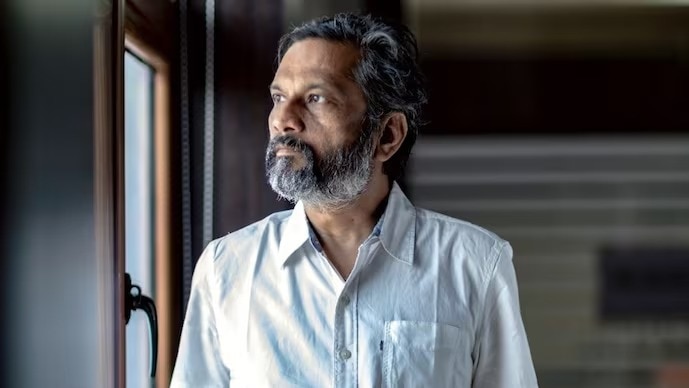
As artificial intelligence gets better at tasks once handled by highly skilled professionals, questions about job losses and how people will earn a living are becoming harder to ignore. Zoho founder Sridhar Vembu believes the answer should not be a government income paid to everyone, but an economy that allows people to earn from activities beyond conventional jobs.
In a post on X on Monday, Vembu opposed universal basic income (UBI) as a response to AI-driven job losses, calling it an “unimaginative and dystopian vision”. He argued that people could continue to earn a living through activities such as caring for children and the elderly, restoring nature, making music and practising spiritual traditions, even as AI takes over more intellectual work.
Vembu’s comments came after OpenAI co-founder Andrej Karpathy, who recently joined Anthropic after previously working on AI at Tesla, spoke about the widening gap between people’s understanding of AI and what the latest systems can actually do.
Vembu says even intellectual jobs are at risk
Vembu began his post by questioning the importance modern society places on intellectual ability. He said he had once been part of this mindset but was now reconsidering it as AI advances into areas that have traditionally required exceptional human intelligence.
“Pure mathematics, the highest intellectual activity known to man, is falling to AI,” he wrote, describing the development as a humbling moment.
He added that most intellectual jobs could be at risk, including a significant portion of software-related work. However, Vembu said he was not worried about what humans would do if AI reduced the need for people to work in conventional jobs. Drawing from his experience of village life, he listed several activities that people could pursue, grouping them into nature, nurture, culture and scripture. These include restoring soil and water, raising children, caring for older people, creating music, sustaining festivals, playing sports and practising spiritual traditions.
According to Vembu, these activities could provide a decent living if people could afford the goods and services produced with very little human labour. He said the challenge for policymakers was to ensure that the benefits of this production were distributed in a way that allowed people to earn and spend money.
“The task of the political economy is to ensure this income distributional outcome,” he wrote.
UBI generally refers to a system in which the government provides people with regular payments, usually without requiring them to work or meet specific income conditions. The idea has gained attention in discussions about how societies could respond if AI and automation reduce the demand for human labour.
Vembu rejected this approach, arguing that it assumes the means of production will be concentrated in the hands of a few. He said governments already have the power to prevent monopolies, suggesting that policymakers should address the concentration of economic power instead of relying on universal payments.
He also linked his argument to Hindu philosophy, saying it had never placed the intellect above everything else. For Vembu, the growing capabilities of AI offer a reason to reconsider a society that places so much value on intellectual work.
Karpathy warns of a widening AI capability gap
Vembu’s remarks followed a post by Karpathy on October 12, in which the AI researcher revisited an earlier observation about how differently people experience modern AI systems. Karpathy estimated that around 6 billion people have barely interacted with large language models (LLMs), while another 1 billion to 2 billion use free AI tools only occasionally. He contrasted these groups with professionals using advanced AI systems for programming, mathematics and research.
According to Karpathy, some of these professionals are now seeing AI agents complete complex projects that previously took weeks or months. He also described a much smaller group of people with access to advanced systems internally, where AI agents can work together on large software projects, cybersecurity tasks and mathematical research.
He attributed the gap partly to differences in access, the size of the problems people ask AI to solve and the areas where these systems perform best. Technical fields such as mathematics and programming, he argued, have seen particularly rapid progress because AI systems can be trained against results that are easier to verify.
Karpathy’s assessment suggests that the impact of AI may look very different depending on how people use it. While some users still see AI as a basic chatbot or writing assistant, others are already using it to complete complex technical work.
– Ends











Leave a Reply