
For the better half of 2026, food recalls − from lettuce to blueberries to chocolate milk − have sparked fears and confusion nationwide. These safety issues took center stage this summer during the nation’s largest recorded Cyclospora outbreak. Since then, food recalls have only gotten more attention.
But food recalls aren’t the only reason food safety has been under a watchful public eye.
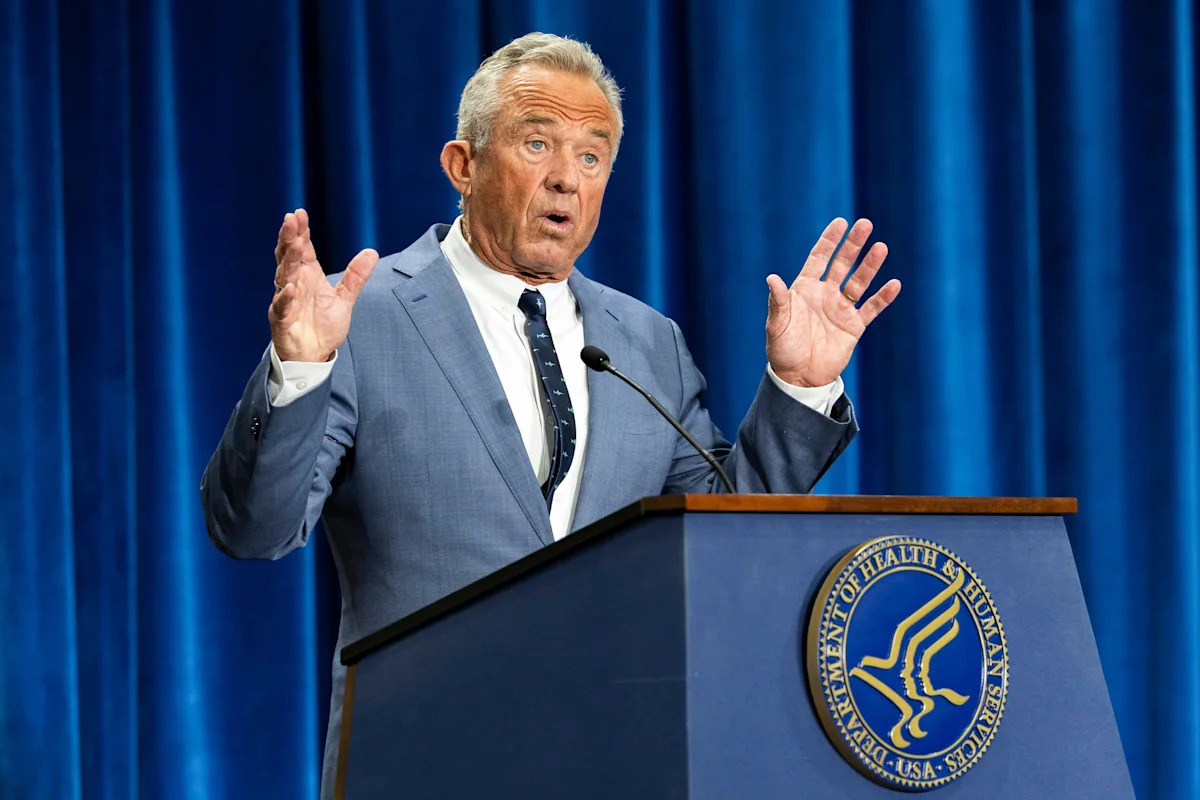
When Robert F. Kennedy Jr. was picked by President Donald Trump to be the next secretary of the Department of Health and Human Services, his messaging resonated with voters who were worried about what’s going into their food. Moms, health-conscious influencers and even some public health skeptics took to social media to spread Kennedy’s “Make America Health Again” (MAHA) campaign and express their distrust in government regulators. After his confirmation, many of these “crunchy moms” rejoiced. They had long been vocal about issues like artificial food dyes, and felt hindered by government agencies like the Food and Drug Administration (FDA) when it came to making eating decisions for their kids.
Some of these advocates are standing by RFK Jr., while other influencers are actively rallying against him. It’s causing a shift in the MAHA movement.
Content creator @brimotherhood, who identifies as a “semi-crunchy” mom of two, has spoken out about the stress of feeding her toddlers in a “defunded MAHA food ecosystem.” She has extended empathy to “MAHA moms” who want to make the best choices for their kids but also encouraged them to stray from movement:
“If you’re a mom who supports MAHA/ RFK Jr. and you’ve been feeling a bit off lately, this is for you… Our children’s health and future are being used as political pawns to benefit billionaires and industry leaders… RFK Jr. and MAHA do not care about our children’s health,” she wrote in a lengthy post.
Another momfluencer, @modernvillagemama, recently shared her frustrations, too: “This administration is supposedly (focused) on making America ‘healthy again,’ while making cuts to funding and oversight that are supposed to help keep our food supply safe. I guess I’ll just keep checking every recall notice because apparently that’s part of my job as a mom now.”
But other moms, like influencer Courtney Luna, say that they still identify with the “MAHA mom” title.
“I identify with those words because we genuinely want not only our families to be healthy, but everybody else to be healthy as well,” she told USA TODAY. As far as the recent recalls are concerned, Luna adds: “I appreciate that (the administration) is giving us this information and sharing the risk so that we can make good decisions.”
‘We don’t want to be terrified to eat a blueberry’
Luna, author of “Carnivore in the Kitchen” and a mom of two children, said the recalls haven’t had much of an effect on her family. Their diet consists of mostly meat, and they tend to shop at local farmers markets rather than big food chains.
But she said the fear of toxins in everyday food, or stressing that “everything’s killing us” and “making us sick,” can have an effect on the body, too.
“We don’t want to be terrified to eat a blueberry, or that lettuce is going to make our kids sick,” Luna said. “There might be a false sense of trust that you go to the grocery store and everything’s going to be fine. So this is a good reminder that things can happen.”
Luna said there’s “a lot of work left to do” to improve food safety, but she still has faith in the MAHA movement to address some of the concerns shared by her and other parents, like continuing to fight artificial food dyes and seed oils.
“It’s a big task, and hopefully they’re just going to be slowly chipping away at the things,” she said. “I think there’s a lot of awareness now that (RFK Jr.) stepped in.”
Food recalls lead more Americans to point the finger at RFK Jr.
Data shows that statistically speaking, food recalls aren’t actually becoming more common. On average, the FDA has classified 126 food recalls per month during the current Trump administration nearly two years in, vs. 135 per month during the entire Biden administration and 164 per month during the first Trump administration, according to a USA TODAY analysis of the FDA enforcement reports conducted in August.
However, this doesn’t necessarly mean that food is getting safer. The number of affected items per recall, and how widespread infections are, matter, too. “The number of recalls does not necessarily correlate with the level of surveillance,” Robert Custard, an environmental health expert who also represents the West Virginia Association of Sanitarians, previously told USA TODAY. “Some years you’re going to have more than others because of the luck of the draw. This year you may have less total recalls, but the cyclospora outbreak that we had this summer may have the highest number of human cases for any foodborne outbreak in recent history.”
This 2026 cyclospora outbreak is ranked as the third-largest outbreak in U.S. history by the number of people sickened, according to the U.S. Public Interest Research Group. The outbreak is affecting public opinion, even outside the MAHA community.
In May 2026, a Kaiser Family Foundation poll found that only 4 in 10 U.S. adults supported the MAHA movement, but that the concerns elevated by it regarding food safety (such as with chemical additives and pesticide use) and corporate influence resonated with a much larger section of the American public. Trust in the government agencies who regulate the food and agriculture industries is low across the board; only about a third of the public are confident in the FDA and EPA to act without outside influence.
Marion Nestle, professor emerita of nutrition, food studies, and public health at New York University and former Health and Human Services senior nutrition policy adviser, told USA TODAY that “MAHA moms should be worried.”
“They have plenty to worry about,” Nestle said. “It turns out that decimating the FDA, Centers for Disease Control and Prevention, and National Institutes of Health and destroying the public health system put Americans at much greater risk of foodborne and other illnesses.”
Nestle added that these advocates were “exploited to get Trump elected.”
“The food changes they wanted were worth making and it’s shameful they are not getting them,” she said.
Contributing: Dian Zhang
This article originally appeared on USA TODAY: Food recalls, ‘crunchy moms’ how the MAHA movement is changing



Leave a Reply