

Abstract
According to the latest IndexBox report on the global Data Capture Hardware Retail market, the market enters 2026 with broader demand fundamentals, more disciplined procurement behavior, and a more regionally diversified supply architecture.
The world retail market for data capture hardware is a foundational infrastructure segment enabling the digital transformation of commerce, logistics, and industrial operations. As of the 2026 analysis period, the market is transitioning from legacy standalone devices toward intelligent, connected systems that integrate with IoT platforms and enterprise software ecosystems. Growth is fundamentally supported by the expansion of e-commerce, the imperative for supply chain optimization, and the increasing embedding of automated data collection into everyday business processes across retail, healthcare, manufacturing, and logistics.
While core product categories such as barcode scanners exhibit maturity in developed economies, innovation in mobile computers, RFID, and advanced imaging technologies continues to unlock new applications and drive replacement cycles. The competitive landscape is fragmented, featuring established global technology leaders alongside agile specialists focused on niche applications or emerging technologies. Market dynamics are further shaped by evolving trade policies, semiconductor supply chain stability, and strategic component stockpiling by major manufacturers.
Toward the 2035 forecast horizon, sustained demand growth is anticipated, though the pace will be modulated by global economic conditions and technology adoption rates in developing economies. The convergence of data capture with analytics and AI is expected to shift value from hardware alone toward integrated solution suites, reshaping procurement priorities and competitive strategies across the value chain.
The baseline scenario for the world data capture hardware retail market through 2035 anticipates sustained expansion, with the market index rising from 100 in 2025 to a projected 168 by 2035, equivalent to a CAGR of approximately 5.3%. This outlook assumes no major global recession, continued digitalization of retail and logistics operations, and a gradual easing of semiconductor supply constraints that affected the early 2020s.
Demand is expected to be most robust in Asia-Pacific, where retail modernization and e-commerce penetration are advancing rapidly, followed by North America and Europe, where replacement cycles and the shift toward integrated mobile computing and RFID solutions underpin steady growth. The product mix is forecast to shift gradually: traditional handheld barcode scanners will retain a large installed base but face slower growth, while mobile computers, RFID systems, and biometric capture devices are expected to outpace the market average.
Retail POS remains the largest end-use sector, but inventory and warehouse management, asset tracking, and access control are projected to gain share as enterprises seek real-time visibility and security. Pricing pressure is likely to persist in commoditized hardware categories, pushing vendors toward software-enabled services and solution bundling. The baseline scenario also incorporates moderate inflationary pressure on hardware prices, partially offset by manufacturing scale and component cost declines. Risks to the outlook include prolonged trade tensions, faster-than-expected technology substitution, and cyclical downturns in capital expenditure among small and medium-sized enterprises.
Demand Drivers and Constraints
Primary Demand Drivers
- Omnichannel retail expansion requiring integrated POS, inventory, and fulfillment data capture across physical and digital channels
- Real-time inventory visibility mandates in warehouse and store operations, driving adoption of mobile computers and RFID systems
- E-commerce and logistics growth increasing demand for barcode scanning and asset tracking hardware in fulfillment centers
- Regulatory and compliance requirements in healthcare, access control, and pharmaceutical traceability supporting biometric and RFID adoption
- Replacement cycles for legacy barcode scanners and POS terminals with connected, IoT-ready devices
- Manufacturing automation and process control investments in emerging economies
Potential Growth Constraints
- Semiconductor and component supply chain volatility affecting lead times and pricing
- Commoditization and price pressure in core barcode scanner and magnetic stripe reader categories
- Slow adoption in small and medium-sized enterprises due to capital expenditure constraints and integration complexity
- Trade policy uncertainty and tariffs impacting cross-border hardware flows
- Competition from general-purpose smartphones and tablets with integrated scanning capabilities in low-intensity use cases
Demand Structure by End-Use Industry
Retail Point of Sale (POS) (estimated share: 28%)
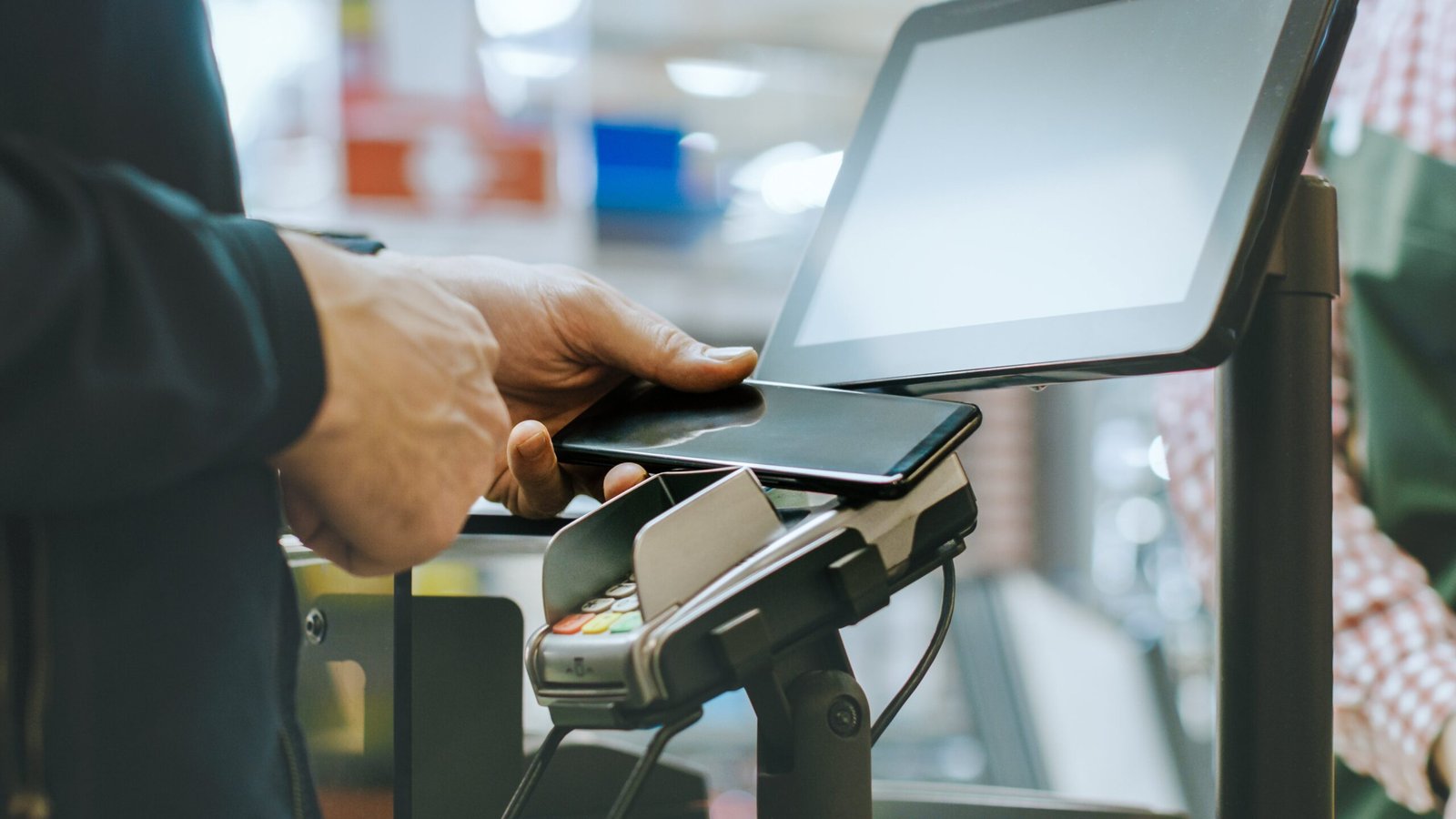
Retail POS remains the largest end-use sector for data capture hardware, encompassing barcode scanners, cash registers, card readers, and self-service kiosks deployed across store networks. Current demand is shaped by omnichannel retail strategies that require seamless integration between in-store transactions, inventory systems, and e-commerce platforms. Retailers are upgrading legacy POS terminals to mobile and cloud-connected devices that support contactless payments, loyalty programs, and real-time inventory lookup. Through 2035, the sector is expected to grow at a moderate pace, with replacement demand dominating in developed markets and new store openings driving volume in emerging economies.
Demand-side indicators include retail sales growth, store count expansion, self-checkout adoption rates, and contactless payment penetration. The shift toward self-service kiosks and mobile POS is expected to alter the product mix, favoring compact, wireless, and imaging-based scanners over traditional laser models. Major trends include the integration of POS hardware with analytics dashboards, the rise of Android-based smart terminals, and the gradual displacement of dedicated cash registers by software-defined POS systems. Current trend: Moderate growth, shifting from fixed POS to mobile and self-service formats.
Major trends: Migration from fixed POS to mobile and self-service formats, Integration of POS hardware with cloud analytics and inventory platforms, Rising adoption of Android-based smart terminals, Contactless and biometric payment authentication, and Store footprint optimization driving compact hardware demand.
Representative participants: NCR Voyix, Toshiba Global Commerce Solutions, Zebra Technologies, Honeywell International, and Datalogic.
Inventory and Warehouse Management (estimated share: 24%)
Inventory and warehouse management represents a high-growth end-use sector for data capture hardware, driven by the need for real-time visibility across increasingly complex supply chains. Current deployments rely heavily on rugged mobile computers, handheld barcode scanners, and RFID readers to track goods from receiving through putaway, picking, and shipping. The expansion of e-commerce fulfillment centers and the adoption of just-in-time inventory practices are accelerating demand for faster, more accurate data capture.
Through 2035, growth is expected to be supported by the transition from batch to real-time inventory updates, the rising use of RFID for item-level tagging, and the integration of data capture devices with warehouse management systems and robotics. Demand-side indicators include warehouse construction activity, e-commerce fulfillment volumes, inventory turnover rates, and RFID tag adoption. The sector is also seeing increased demand for wearable and voice-directed devices that improve worker productivity. Major trends include the convergence of scanning and mobile computing into all-in-one devices, the growth of passive RFID for inventory accuracy, and the use of analytics to optimize picking routes and stock levels.
Current trend: Strong growth, supported by real-time visibility and RFID adoption.
Major trends: Real-time inventory visibility replacing batch updates, Item-level RFID adoption for accuracy and speed, Wearable and voice-directed data capture devices, Integration with warehouse management and robotics systems, and Rugged mobile computers replacing dedicated scanners.
Representative participants: Zebra Technologies, Honeywell International, Datalogic, Bluebird, and CipherLab.
Asset Tracking and Logistics (estimated share: 20%)
Asset tracking and logistics is a dynamic end-use sector for data capture hardware, encompassing barcode and RFID scanning for parcels, pallets, containers, and high-value assets across transportation and logistics networks. Current demand is driven by the expansion of e-commerce parcel volumes, the need for end-to-end shipment visibility, and regulatory requirements for traceability in sectors such as pharmaceuticals and food. Logistics operators are deploying rugged mobile computers, handheld RFID readers, and fixed-position scanners at dock doors and conveyor lines to capture data at high speed.
Through 2035, growth is expected to outpace the market average, supported by the adoption of RFID for pallet and container tracking, the integration of data capture with transportation management systems, and the rise of same-day delivery models. Demand-side indicators include parcel volume growth, fleet size, warehouse throughput, and RFID adoption rates. Major trends include the use of passive UHF RFID for yard and dock management, the convergence of scanning and telematics in delivery vehicles, and the deployment of fixed industrial scanners for automated sortation. Current trend: Above-average growth, driven by RFID and mobile computing adoption.
Major trends: Passive UHF RFID for pallet and container tracking, Fixed industrial scanners for automated sortation, Integration with transportation management systems, Rugged mobile computers with cellular connectivity, and Traceability regulations driving adoption in pharma and food.
Representative participants: Zebra Technologies, Honeywell International, Datalogic, Unitech Electronics, and Opticon.
Access Control and Security (estimated share: 16%)
Access control and security is a steadily growing end-use sector for data capture hardware, covering biometric devices, smart card readers, and magnetic stripe readers used in enterprise, government, and commercial buildings. Current demand is shaped by the need to secure facilities, manage employee and visitor identities, and comply with data protection and privacy regulations. Organizations are upgrading from legacy magnetic stripe and proximity card systems to biometric and multi-factor authentication solutions that offer higher security and auditability.
Through 2035, growth is expected to be supported by the adoption of facial and fingerprint recognition, the integration of access control with workforce management systems, and the expansion of smart card use in government ID and banking. Demand-side indicators include commercial construction activity, enterprise security spending, government identification programs, and biometric adoption rates. Major trends include the shift from contact to contactless authentication, the convergence of physical and logical access control, and the use of mobile credentials on smartphones. Current trend: Steady growth, with biometric and smart card upgrades.
Major trends: Migration from magnetic stripe to biometric and smart card readers, Contactless and mobile credential adoption, Integration with workforce management and HR systems, Government ID and banking smart card programs, and Multi-factor authentication in enterprise security.
Representative participants: Honeywell International, Zebra Technologies, Datalogic, Panasonic Connect, and Getac.
Healthcare, Manufacturing, and Other (estimated share: 12%)
The healthcare, manufacturing, and other end-use sector encompasses a diverse set of applications, including patient identification, document management, manufacturing process control, and library systems. Current demand in healthcare is driven by the need for accurate patient identification, medication tracking, and compliance with regulations such as the FDA’s unique device identification rules. Hospitals and clinics are deploying barcode scanners, RFID readers, and biometric devices to reduce medical errors and improve workflow efficiency. In manufacturing, data capture hardware supports process control, quality assurance, and inventory management on production lines.
Through 2035, growth is expected to be moderate, supported by the expansion of healthcare infrastructure in emerging economies, the adoption of electronic health records, and the digitization of manufacturing processes. Demand-side indicators include healthcare spending, hospital admissions, manufacturing output, and regulatory compliance deadlines. Major trends include the use of RFID for surgical instrument tracking, the integration of scanning with electronic medical records, and the deployment of rugged devices in harsh manufacturing environments. Current trend: Moderate growth, supported by patient identification and process control.
Major trends: Patient identification and medication tracking in healthcare, RFID for surgical instrument and asset tracking, Integration with electronic health records, Rugged devices for manufacturing process control, and Document management and library digitization.
Representative participants: Honeywell International, Zebra Technologies, Datalogic, Panasonic Connect, and CipherLab.
Key Market Participants
Interactive table based on the Store Companies dataset for this report.
| # | Company | Headquarters | Focus | Scale | Note |
|---|---|---|---|---|---|
| 1 | Zebra Technologies | Lincolnshire, Illinois, USA | Barcode scanners, mobile computers, printers | Global leader | Dominant in enterprise-grade solutions |
| 2 | Honeywell | Charlotte, North Carolina, USA | Barcode scanners, mobile computers, sensors | Global enterprise | Strong in industrial & retail segments |
| 3 | Datalogic | Bologna, Italy | Barcode readers, mobile computers, sensors | Global | Major European player with global reach |
| 4 | Cognex | Natick, Massachusetts, USA | Machine vision systems, barcode readers | Global | Leader in industrial machine vision |
| 5 | SATO | Tokyo, Japan | Barcode printers, RFID, labeling solutions | Global | Prominent in auto-ID printing |
| 6 | Toshiba TEC | Tokyo, Japan | Barcode printers, POS systems, RFID | Global | Major in retail & office solutions |
| 7 | Epson | Suwa, Nagano, Japan | POS printers, label printers, scanners | Global | Strong in receipt and label printing |
| 8 | Denso Wave | Aichi, Japan | Barcode scanners, QR code technology | Global | Inventor of QR code, industrial focus |
| 9 | Newland | Fuzhou, Fujian, China | Barcode scanners, POS terminals, RFID | Global | Major Asian manufacturer, growing globally |
| 10 | Bluebird | Sungnam, South Korea | Mobile computers, barcode scanners, RFID | Global | Significant in rugged mobile devices |
| 11 | CASIO | Tokyo, Japan | POS systems, handheld terminals, calculators | Global | Known for durable retail hardware |
| 12 | Panasonic | Kadoma, Osaka, Japan | Rugged tablets, mobile computers | Global | Focus on ruggedized devices for various sectors |
| 13 | Unitech | New Taipei City, Taiwan | Barcode scanners, mobile computers, RFID | Global | Taiwan-based manufacturer with broad portfolio |
| 14 | Socket Mobile | Newark, California, USA | Mobile barcode scanners, data capture | Mid-market | Specializes in companion scanners for mobile devices |
| 15 | Wasp Barcode Technologies | Clearwater, Florida, USA | Barcode scanners, label printers, inventory software | SMB focus | Targets small to medium businesses |
| 16 | Opticon | Tokyo, Japan | Barcode scanners, mobile computers | Global | Japanese brand with global distribution |
| 17 | CipherLab | Taipei, Taiwan | Barcode scanners, mobile computers, RFID | Global | Taiwan-based provider for retail & logistics |
| 18 | Microscan | Renton, Washington, USA | Barcode readers, machine vision, verification | Global | Specialist in high-performance reading |
| 19 | Intermec (by Honeywell) | Charlotte, North Carolina, USA | Legacy brand for printers & mobile computers | Global | Now integrated into Honeywell |
| 20 | Motorola Solutions | Chicago, Illinois, USA | Two-way radios, video security, legacy scanners | Global | Scanner business sold to Zebra, brand persists |
Regional Dynamics
Asia-Pacific (estimated share: 38%)
Asia-Pacific is the largest and fastest-growing regional market, supported by rapid retail modernization, e-commerce expansion, and manufacturing automation in China, India, and Southeast Asia. Demand is broad-based across POS, inventory management, and logistics, with local vendors gaining share in price-sensitive segments. Direction: Fastest-growing region.
North America (estimated share: 26%)
North America remains a mature market with steady replacement demand and early adoption of advanced technologies such as RFID and biometrics. Retail and logistics sectors are key drivers, while healthcare and access control offer growth opportunities. The market is characterized by high penetration and a focus on integrated solutions. Direction: Mature but steady growth.
Europe (estimated share: 22%)
Europe exhibits moderate growth, with demand driven by retail modernization, supply chain optimization, and regulatory compliance in healthcare and security. The market is relatively mature, with replacement cycles and the adoption of connected devices supporting steady demand. Eastern Europe offers higher growth potential. Direction: Moderate growth.
Latin America (estimated share: 8%)
Latin America is an emerging market with growth supported by retail expansion, e-commerce adoption, and logistics infrastructure development. Brazil and Mexico are the largest markets, while smaller economies offer untapped potential. Price sensitivity and economic volatility are key challenges. Direction: Emerging growth.
Middle East & Africa (estimated share: 6%)
The Middle East and Africa region is gradually growing, with demand driven by retail sector development, government identification programs, and logistics investments in Gulf countries. Africa remains a smaller market with potential in mobile-enabled data capture and healthcare identification. Direction: Gradual growth.
Market Outlook (2026-2035)
In the baseline scenario, IndexBox estimates a 5.3% compound annual growth rate for the global data capture hardware retail market over 2026-2035, bringing the market index to roughly 168 by 2035 (2025=100).
Note: indexed curves are used to compare medium-term scenario trajectories when full absolute volumes are not publicly disclosed.
For full methodological details and benchmark tables, see the latest IndexBox Data Capture Hardware Retail market report.
Start Selling Online with ShopOpen24
Are you a small business owner or entrepreneur? Discover seller opportunities and connect with customers through ShopOpen24.
Explore ShopOpen24 →ShopOpen24 | Local Products. Global Reach.











Leave a Reply